

The first user to set up an account on your Infisical instance becomes the
server administrator.
Accessing the server console
Select Server Console in the top navigation bar. The button is only shown to server administrators.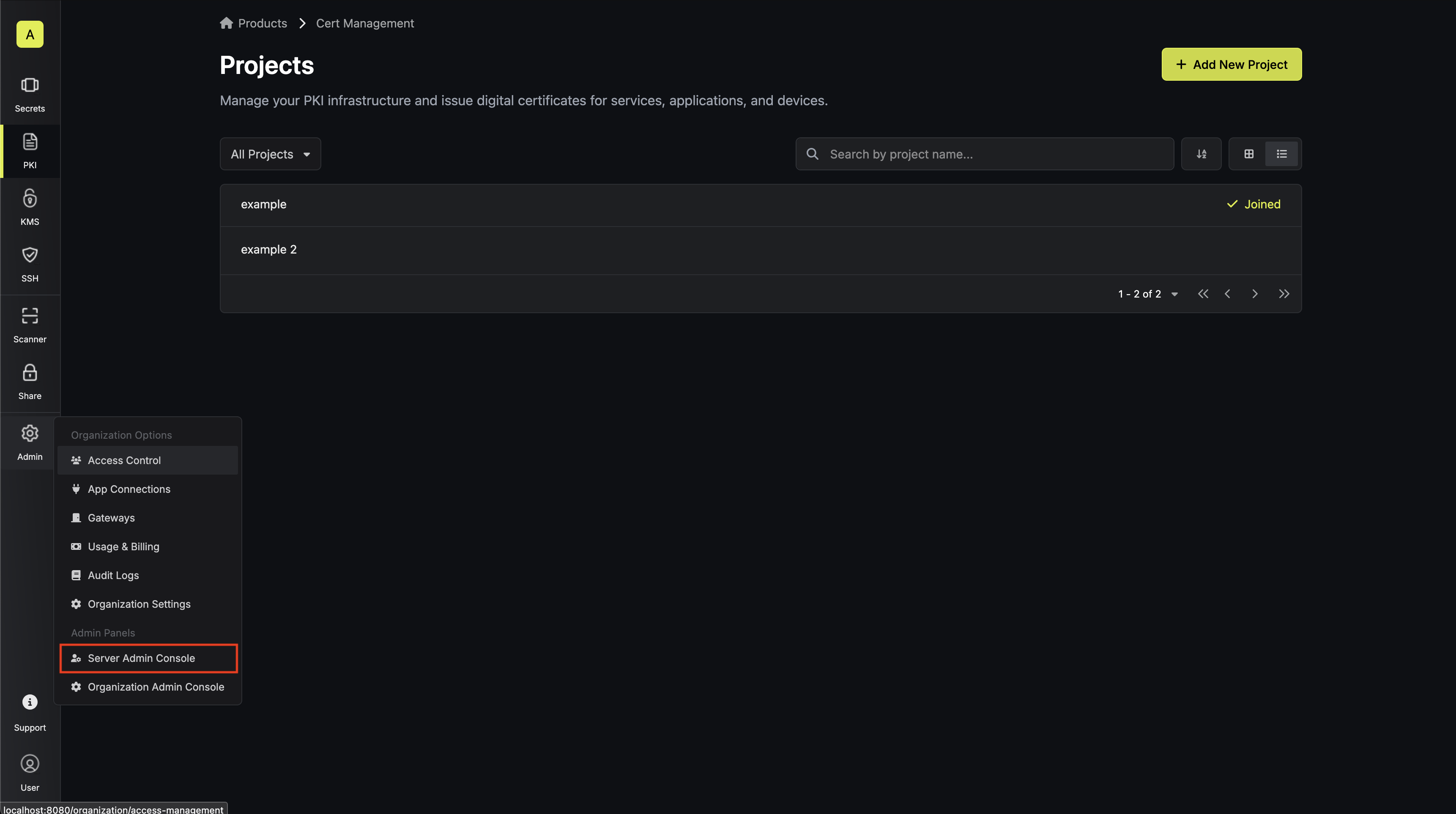 The console opens on General. The sidebar holds the rest of the instance settings.
General
Instance-wide settings for signups, the default organization, LDAP email trust, the notices users see, and allowed storage hostnames.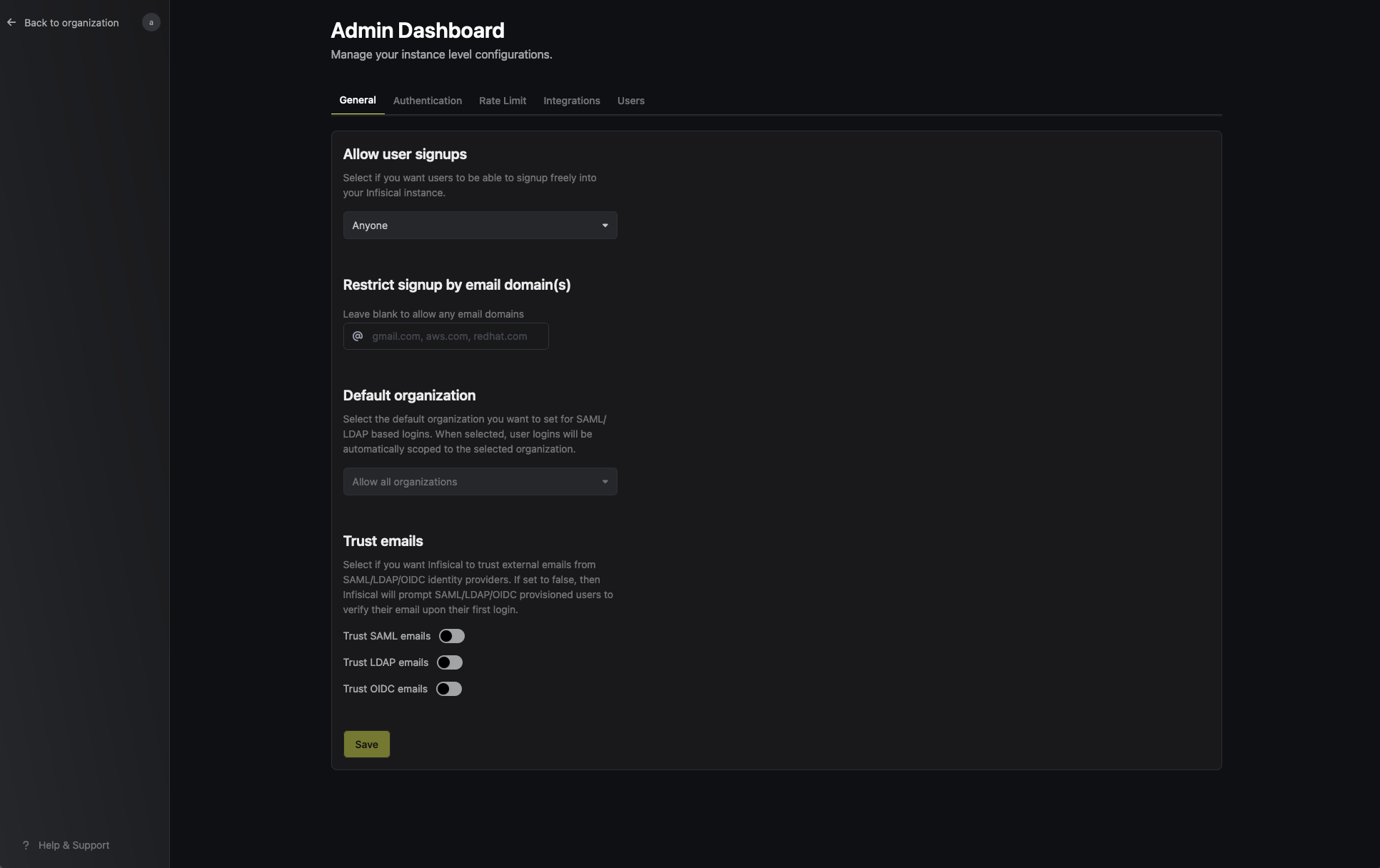
Allow user signups
Signup mode controls who can self-serve create an account on your instance. Anyone lets every visitor who reaches the instance sign up. Disabled blocks direct signup and OAuth account creation; SCIM and LDAP provisioning still create accounts, and existing users can still be invited to an organization.Allowed email domains
When Signup mode is Anyone, Allowed email domains limits signups to the domains you list, such as your company’s. Leave it blank to allow any domain.Default organization
If you use SAML, LDAP, or OIDC for a single organization on your instance, set Organization to that organization. Users then skip entering the organization slug at login.Trust LDAP emails
By default, users provisioned through LDAP have to verify their email address on first login, which prevents email spoofing. Turn on Trust LDAP emails to skip that step for LDAP users across every organization on this instance. For SAML and OIDC, email verification is skipped automatically when an organization enforces SSO.Notices
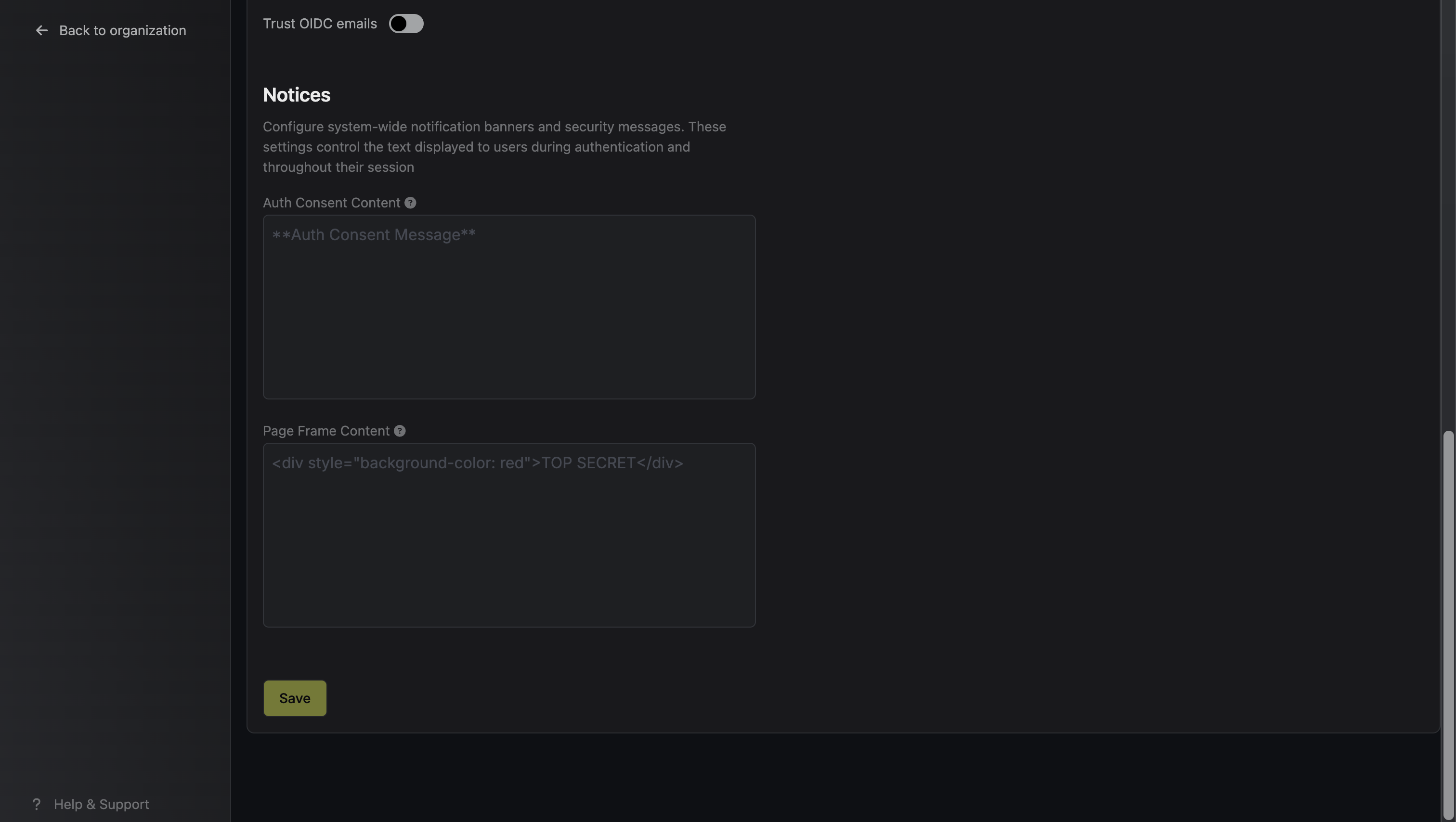
Users see Auth consent content on the login page. Use it for anything they should read before signing in, such as a maintenance message or an access notice. HTML, Markdown, and plain text all work, so you can style it: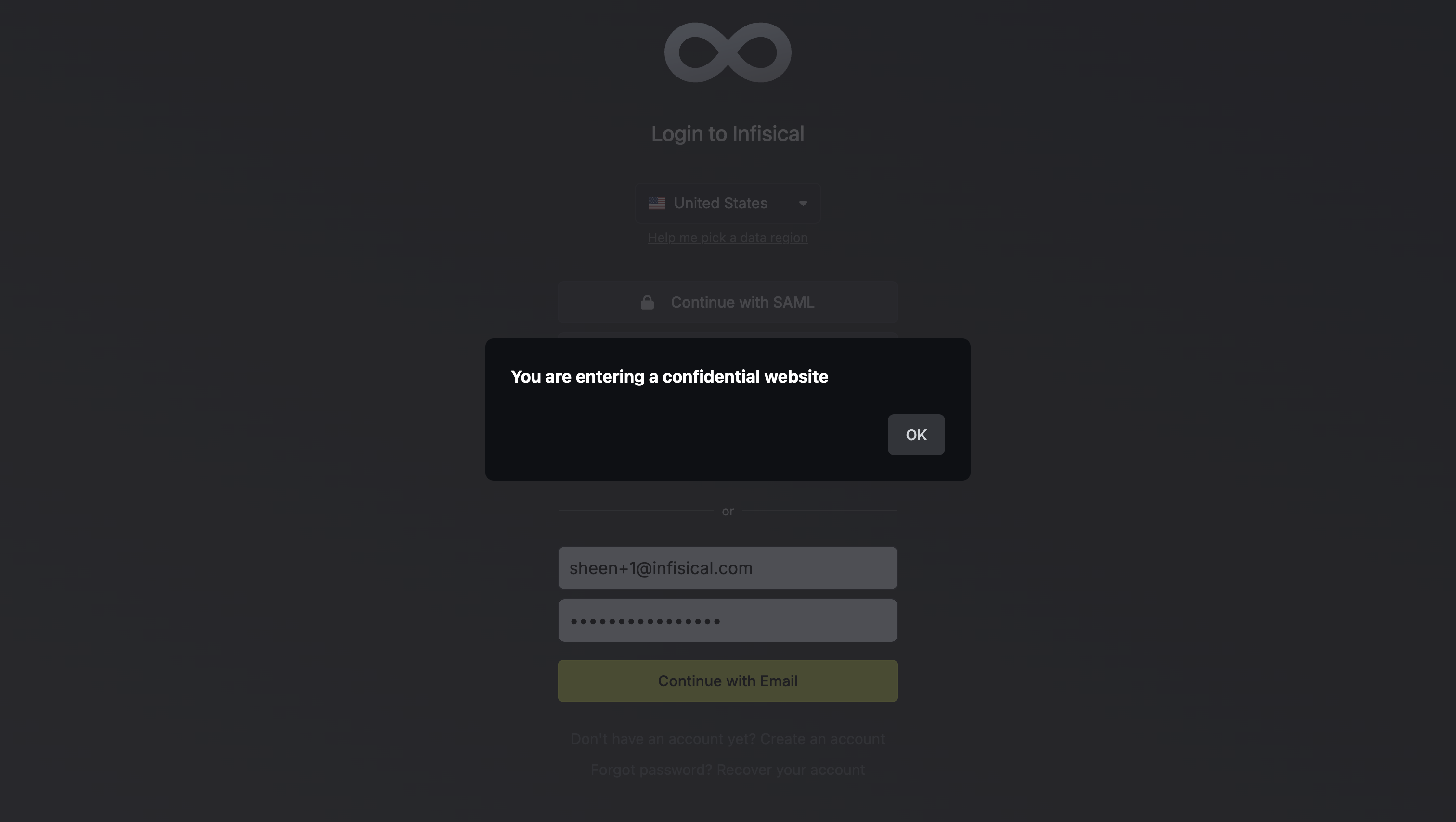 Page frame content appears as a header and a footer on every page a signed-in user opens. It accepts the same formats.
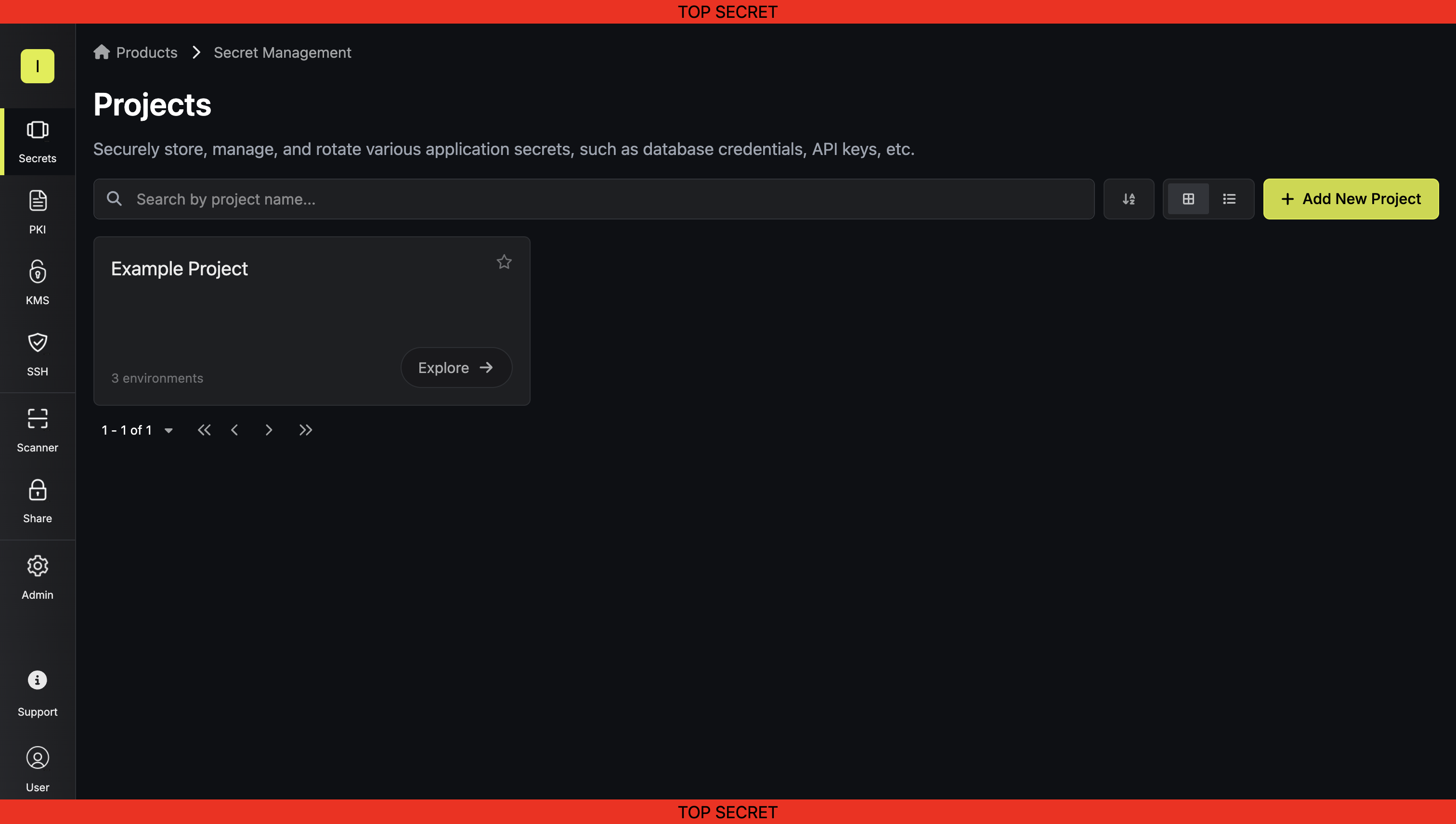 Select Save to apply either change.
Allowed storage hostnames
If you store PAM session recordings on your own S3-compatible server, such as MinIO, add the server’s hostname under Hostnames and select Save. Include the port if it isn’t 443, such asminio.example.com:9000, and make sure the server accepts HTTPS connections. If the hostname resolves to a private IP address, also set S3_COMPATIBLE_STORAGE_ALLOW_INTERNAL_IP to true.
An S3-Compatible Storage connection can then use the server as its endpoint, and browsers can play back recordings stored there. If the server expects a signing region other than us-east-1, as Garage does, enter it under Region on the connection.
Authentication
Use Login Methods to choose the login methods available on the instance. Turn a method off here and no organization can use it.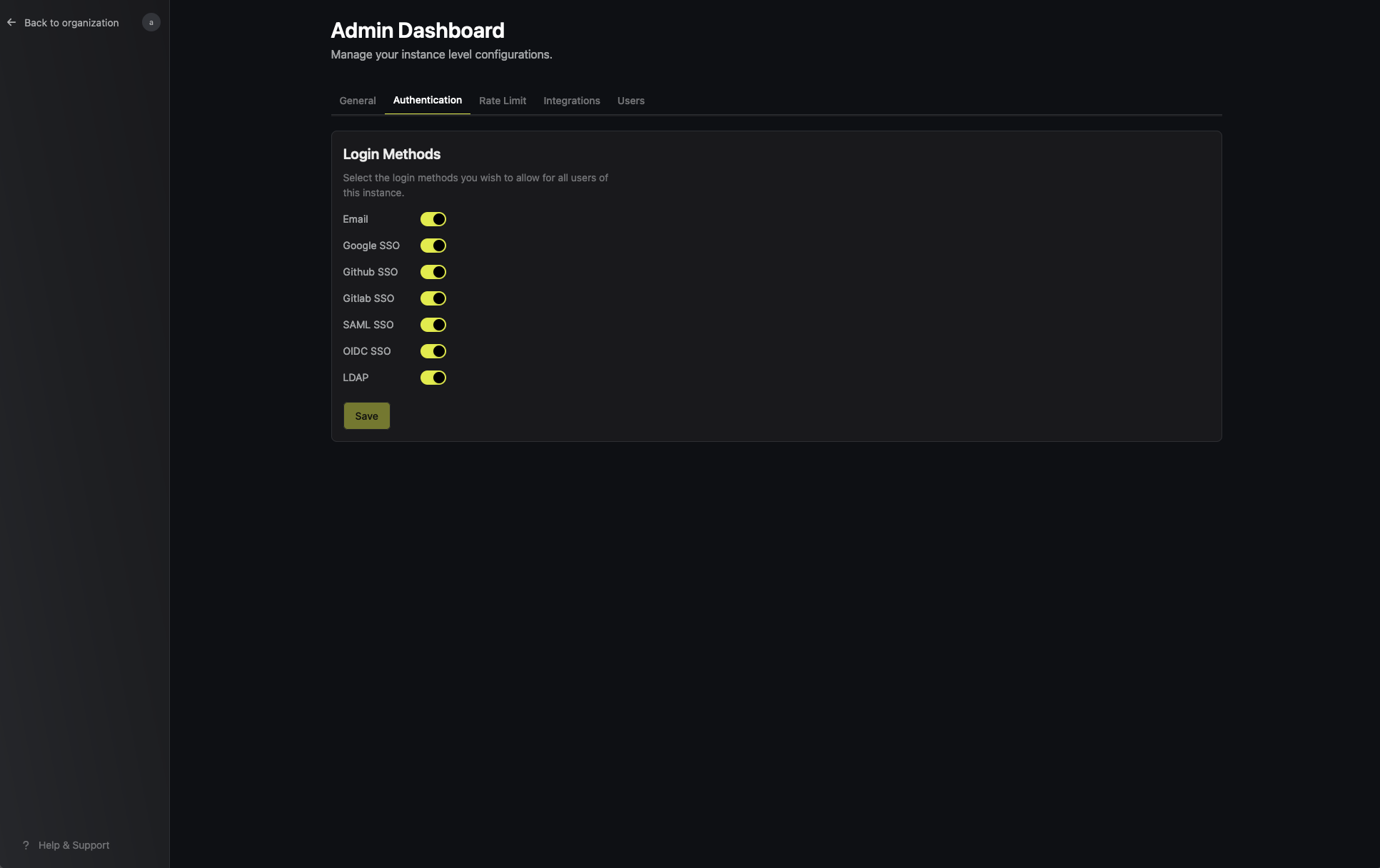
Resource overview
Resource Overview lists the organizations, users, machine identities, and email domains on the instance. Each list has its own entry in the sidebar. On Users, search for a user by name or email, filter the list down to server admins, and select the three dot menu on a row to remove the user or change their server admin access.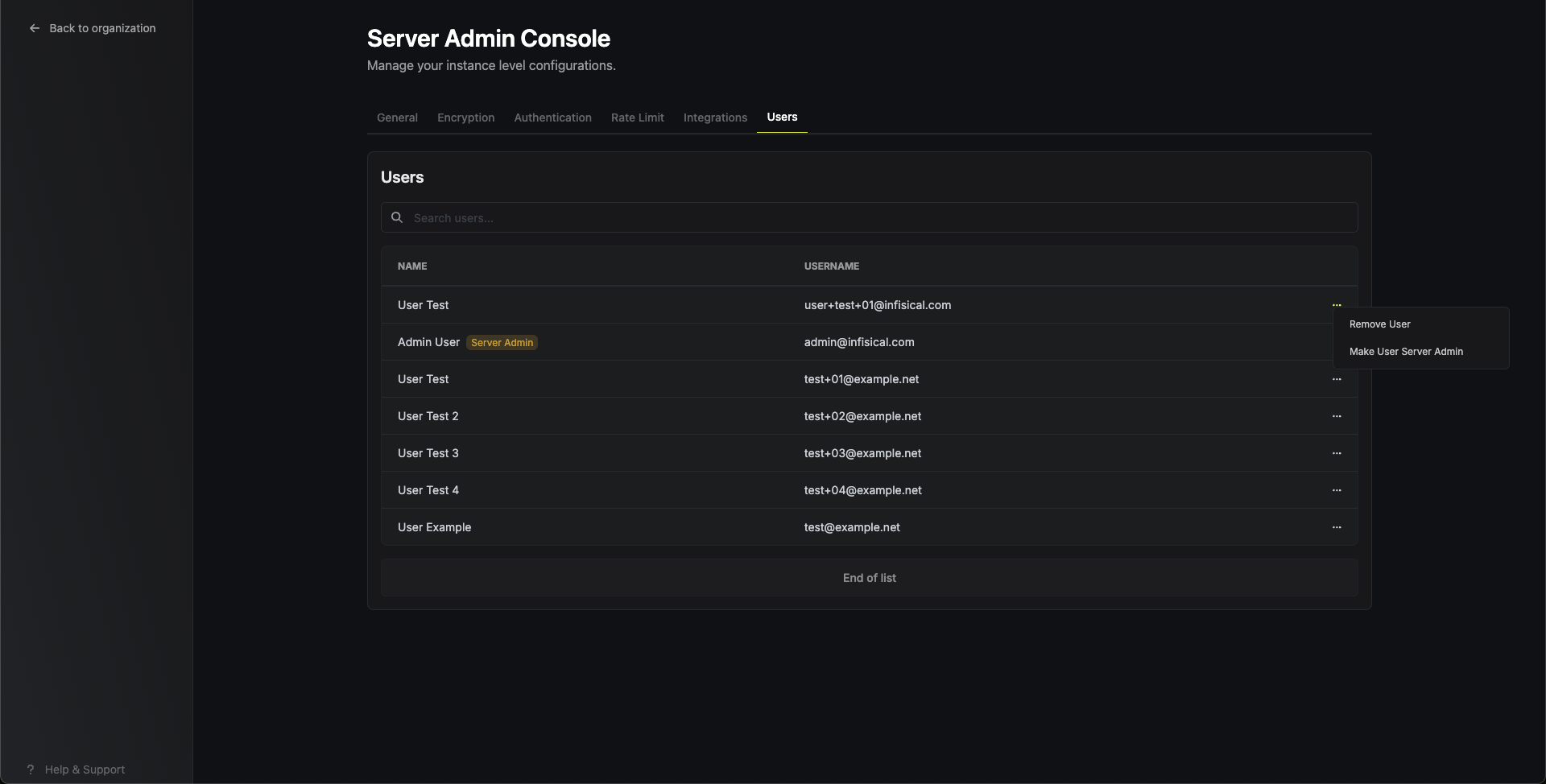
Access control
Access Control lists the server administrators of the instance. Select Add Admin to grant server admin access to an existing user.Other sections
The remaining sidebar entries have their own guides:- Encryption: the KMS encryption strategy and the root encryption keys. See Rotating the encryption key.
- Environment Variables: overrides for instance configuration, so you can change a value without redeploying. See Environment variables.
- Integrations: the instance-wide settings for Slack and Microsoft Teams.
- Caching: invalidate the encrypted secrets cache.