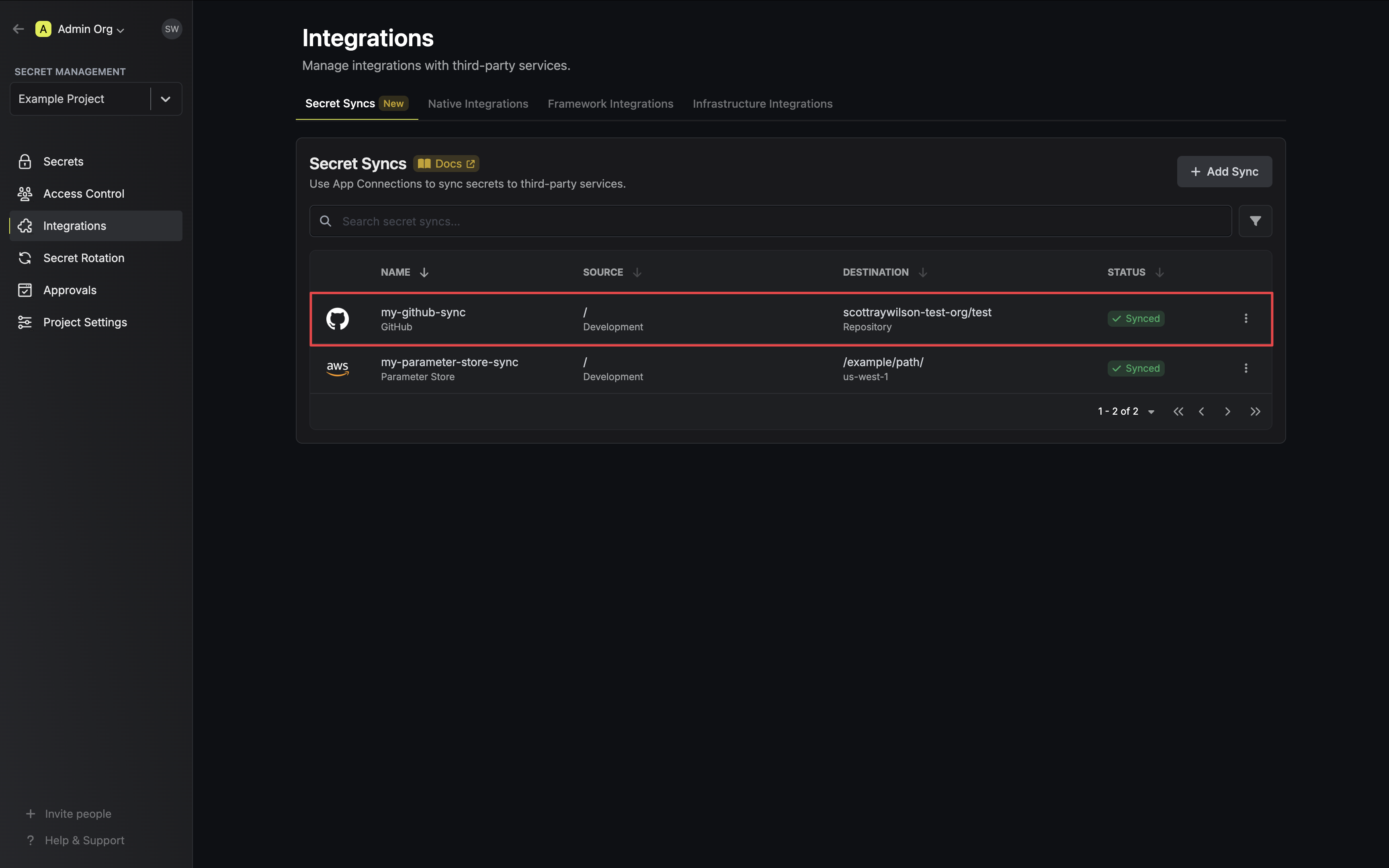
- Set up and add secrets to Infisical Cloud
- Create a GitHub Connection
- Ensure your network security policies allow incoming requests from Infisical to this secret sync provider, if network restrictions apply.
Secret types
A GitHub sync writes to one type of GitHub secret. Each type is read by a different part of GitHub, supports different scopes, and needs its own permission on the GitHub Connection:
How you grant those permissions depends on the connection:
- If your connection uses a GitHub App or a fine-grained personal access token, give each permission read and write access
- If your connection uses OAuth or a classic personal access token, the
repoandadmin:orgscopes already cover every secret type - If your connection is to GitHub Enterprise Server, you can’t sync Codespaces secrets, because GitHub Enterprise Server doesn’t include Codespaces
If you add a permission to an existing GitHub App, an owner of each installation has to approve the new permission on GitHub before Infisical can use it.
Create a GitHub sync
- Infisical UI
- API
-
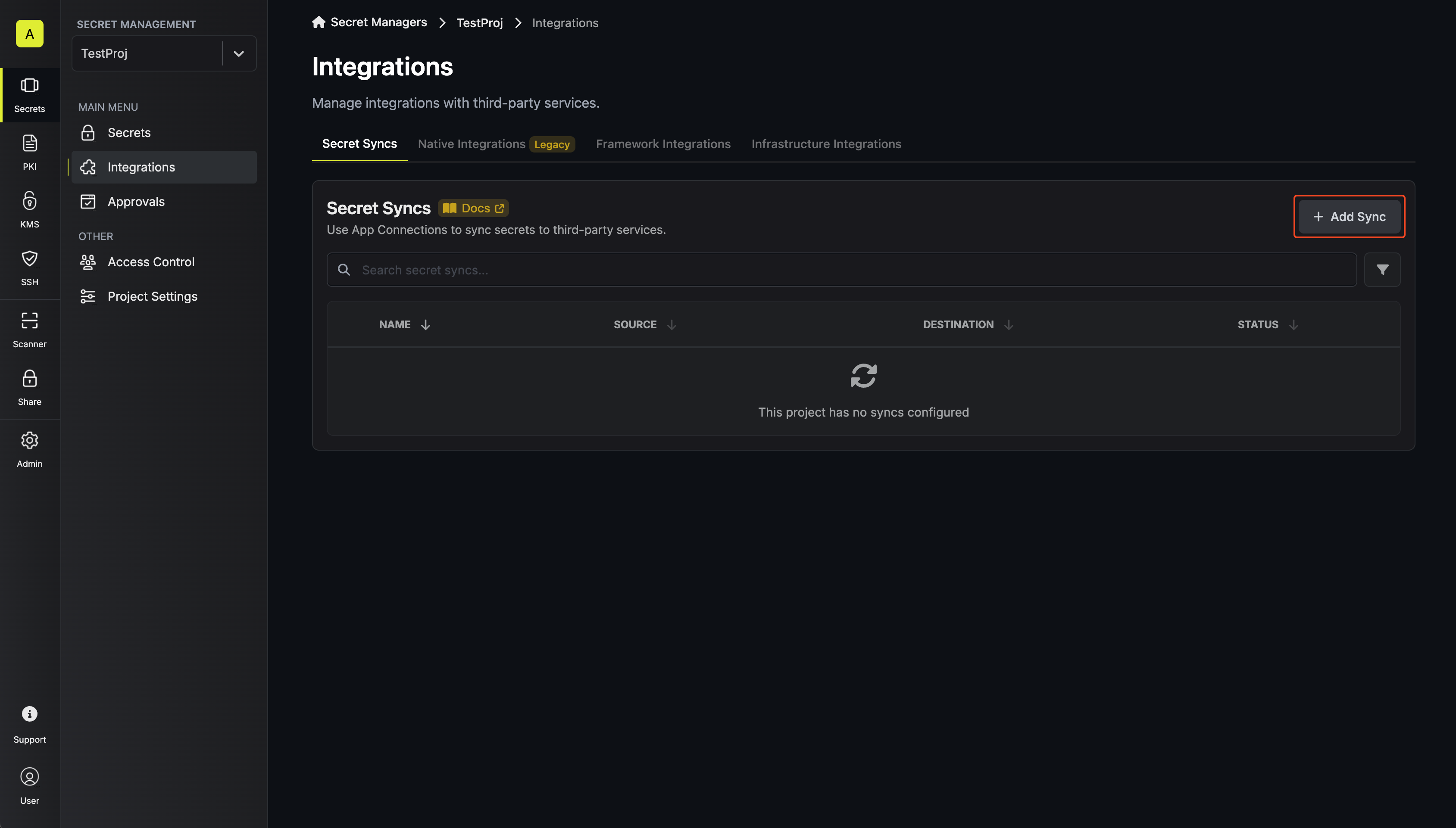
Navigate to Project > Integrations and select the Secret Syncs tab. Select the Add Sync button.
-
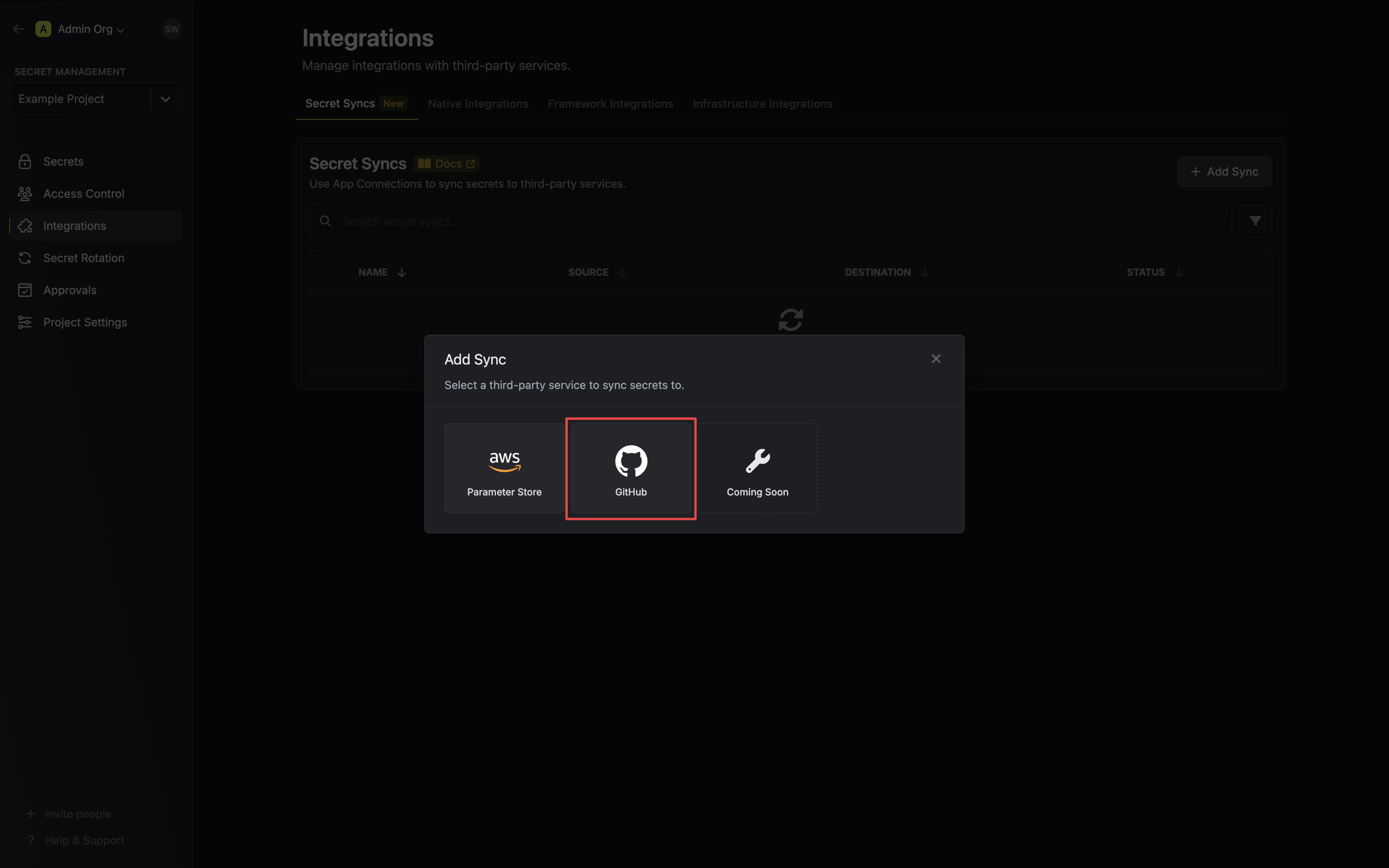
Select the GitHub option.
-
Configure the Source from where secrets should be retrieved, then click Next.
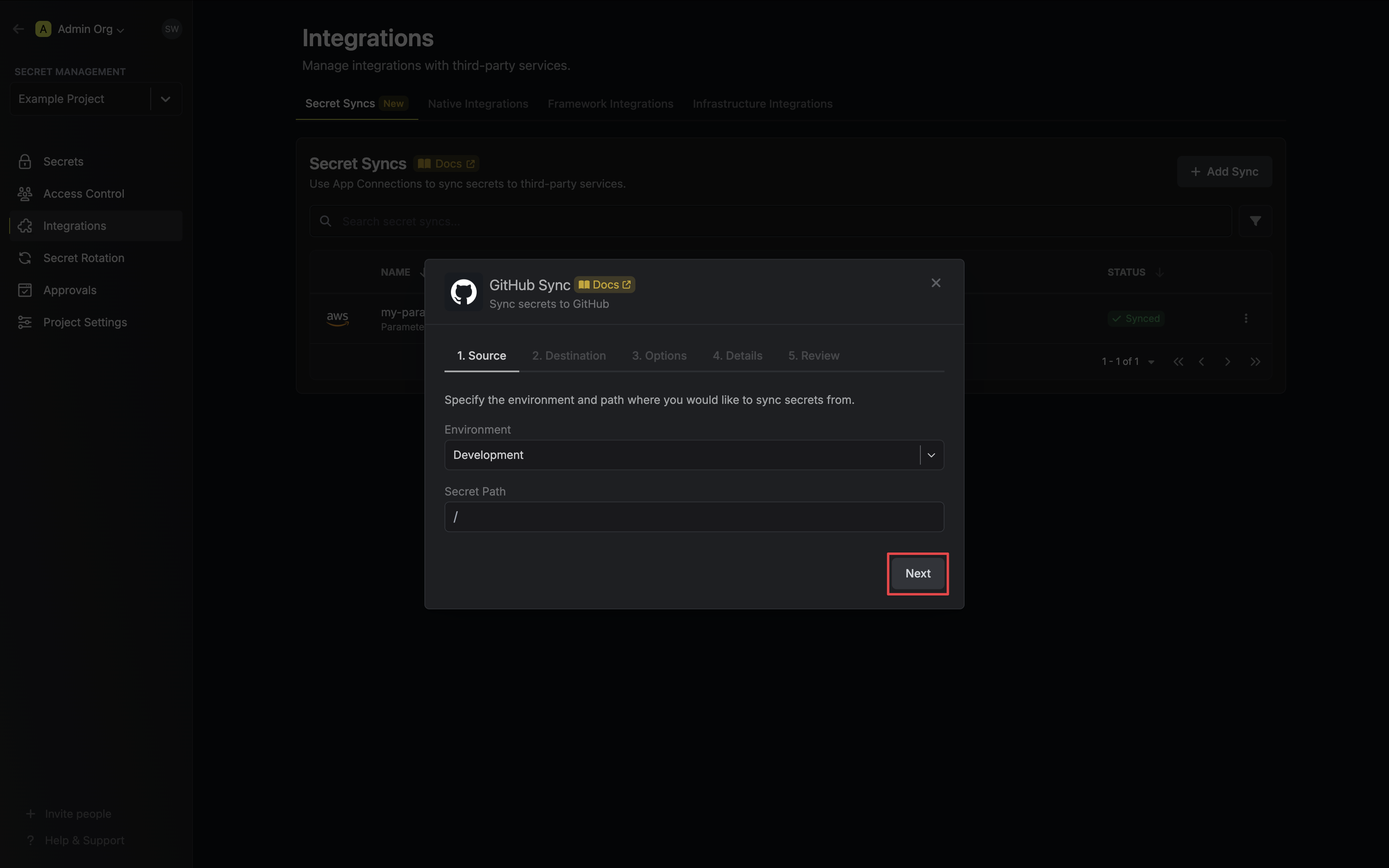
- Environment: The project environment to retrieve secrets from.
- Secret Path: The folder path to retrieve secrets from.
-
Configure the Destination to where secrets should be deployed, then select Next.
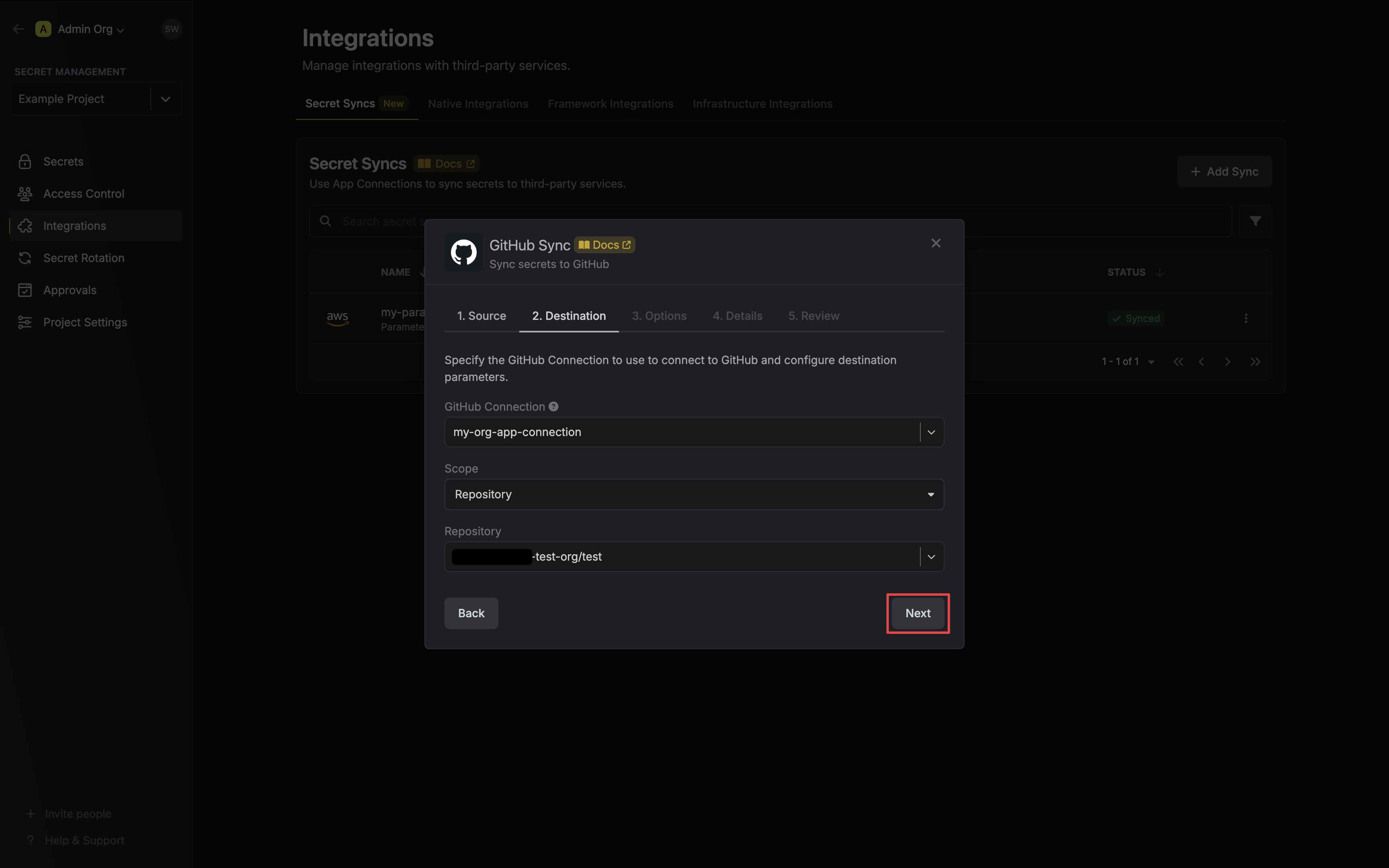
- GitHub Connection: The GitHub Connection to authenticate with
- Secret Type: The type of GitHub secret to sync to (defaults to Actions)
- Actions: Secrets for GitHub Actions workflows
- Dependabot: Secrets for Dependabot
- Codespaces: Secrets for GitHub Codespaces
- Scope: The GitHub secret scope to sync secrets to
- Organization: Sync secrets to a specific organization
- Repository: Sync secrets to a specific repository
- Repository Environment: Sync secrets to a specific repository’s environment (only for the Actions secret type)
Organization
- Organization: The organization to deploy secrets to.
- Visibility: Determines which organization repositories can access deployed secrets.
- All Repositories: All repositories of the organization. (Public repositories if not a Pro/Team account)
- Private Repositories: All private repositories of the organization. (Requires Pro/Team account)
- Selected Repositories: Only the selected Repositories.
- Selected Repositories: The selected repositories if Visibility is set to Selected Repositories.
Repository
- Repository: The repository to deploy secrets to.
Repository Environment
- Repository: The repository to deploy secrets to.
- Environment: The repository’s environment to deploy secrets to.
-
Configure the Sync Options to specify how secrets should be synced, then click Next.
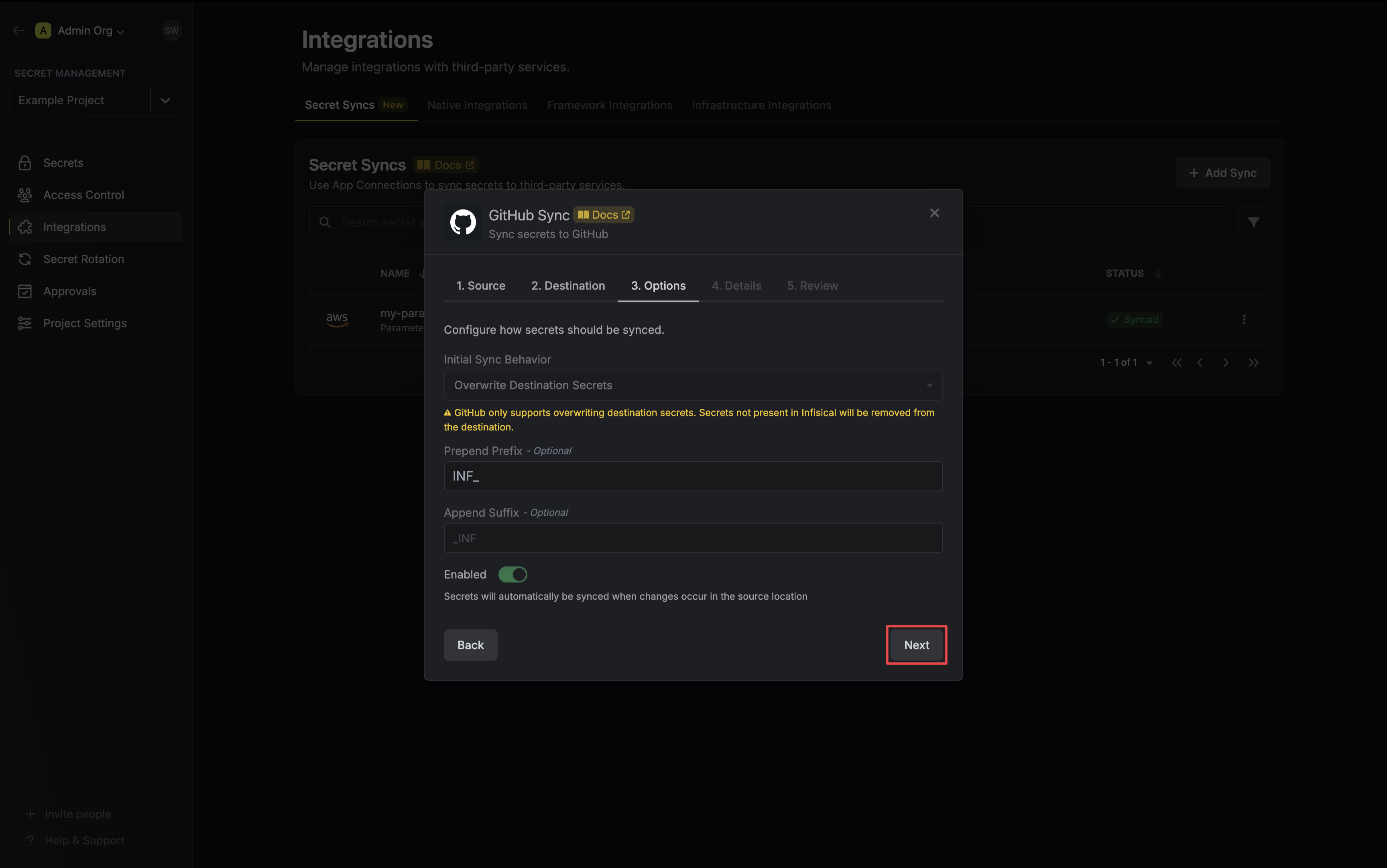
- Initial Sync Behavior: Determines how Infisical should resolve the initial sync.
- Overwrite Destination Secrets: Removes any secrets at the destination endpoint not present in Infisical.
GitHub does not support importing secrets. - Key Schema: Template that determines how secret names are transformed when syncing, using
{{secretKey}}as a placeholder for the original secret name and{{environment}}for the environment.
We highly recommend using a Key Schema to ensure that Infisical only manages the specific keys you intend, keeping everything else untouched.- Auto-Sync Enabled: If enabled, secrets will automatically be synced from the source location when changes occur. Disable to enforce manual syncing only.
- Disable Secret Deletion: If enabled, Infisical will not remove secrets from the sync destination. Enable this option if you intend to manage some secrets manually outside of Infisical.
- Initial Sync Behavior: Determines how Infisical should resolve the initial sync.
-
Configure the Details of your GitHub Sync, then click Next.
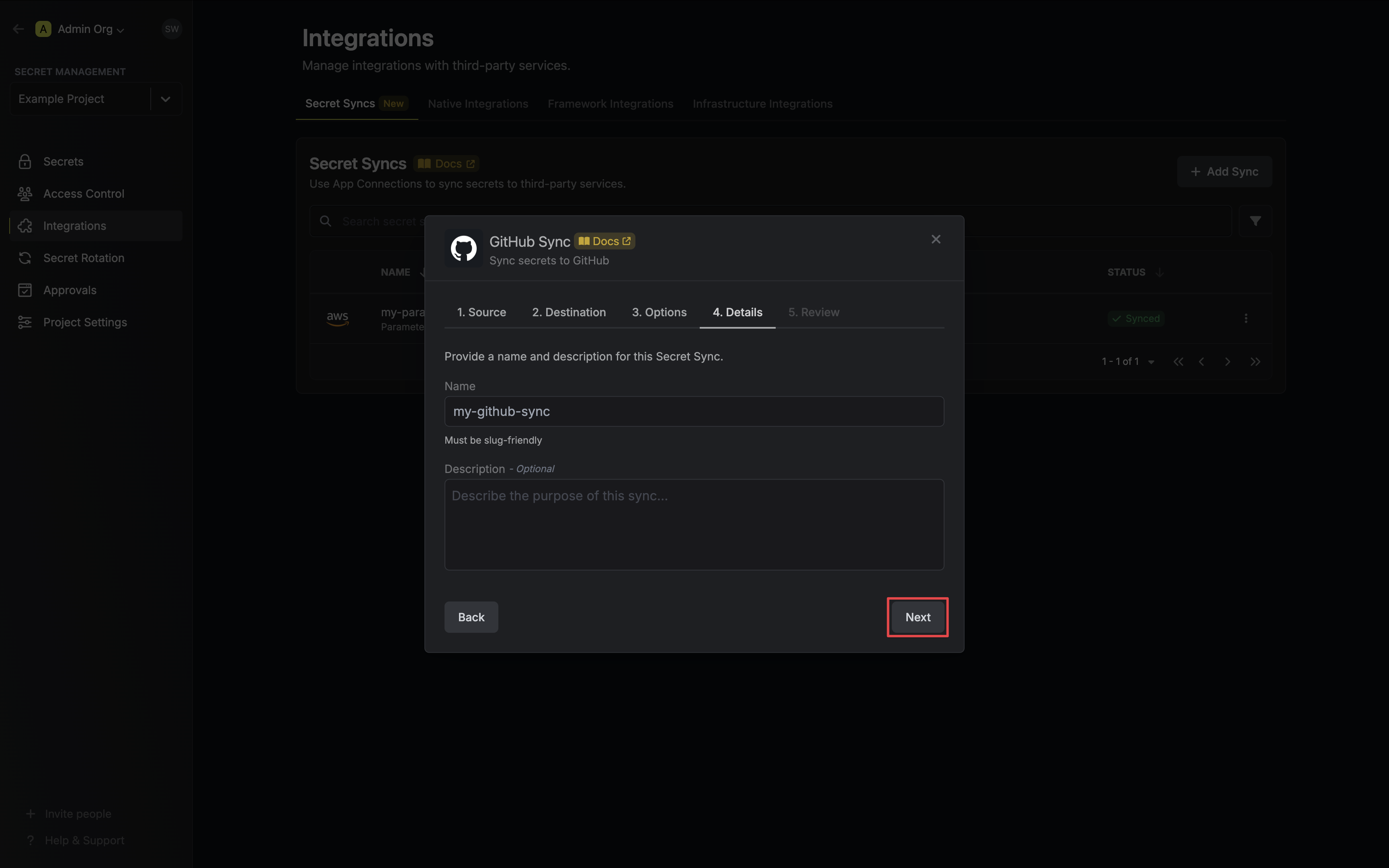
- Name: The name of your sync. Must be slug-friendly.
- Description: An optional description for your sync.
-
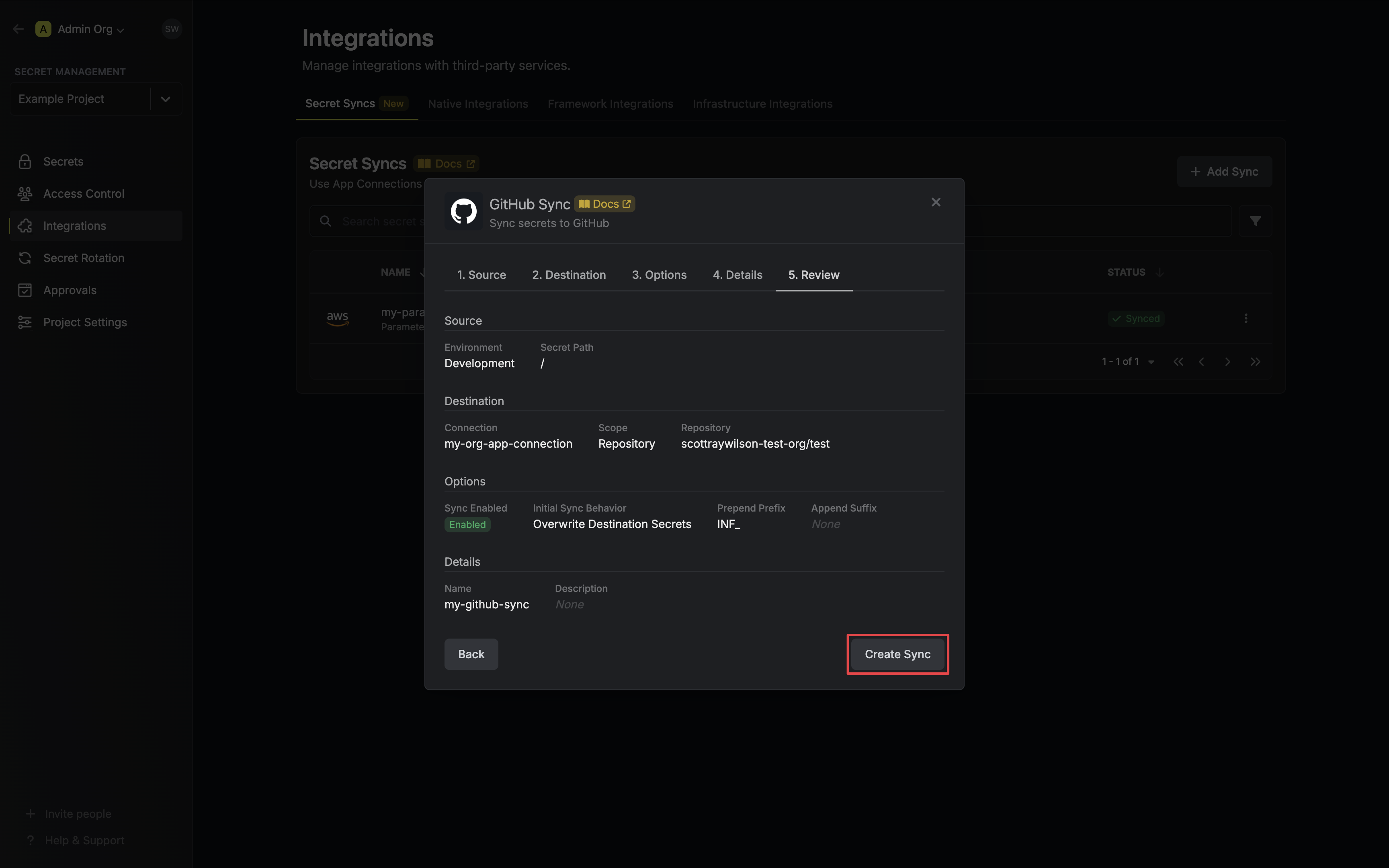
Review your GitHub Sync configuration, then click Create Sync.
-
If enabled, your GitHub Sync will begin syncing your secrets to the destination endpoint.