Folder-level access controls are a paid feature.If you’re using Infisical Cloud, then they’re available under the Pro plan.
If you’re self-hosting Infisical, contact [email protected] to purchase a license.
How folder access works
When you give a single user or machine identity a role on a folder, that role takes precedence over their project role. You can use folder access to:- Give someone access to a single folder their project role doesn’t reach.
- Hold someone to a lower role inside a sensitive folder.
- Hand out short-lived access for an incident or a one-off task.
Folder access roles
There are five different folder access roles, listed here from least to most privileged. Each role includes everything the roles before it allow.Granting folder access
Open the folder access sheet
Navigate to your project’s Secrets page and select an environment. You can set access on the folder you’re currently viewing, or on any folder in the list. To set access on the current folder, select the members icon next to the environment selector.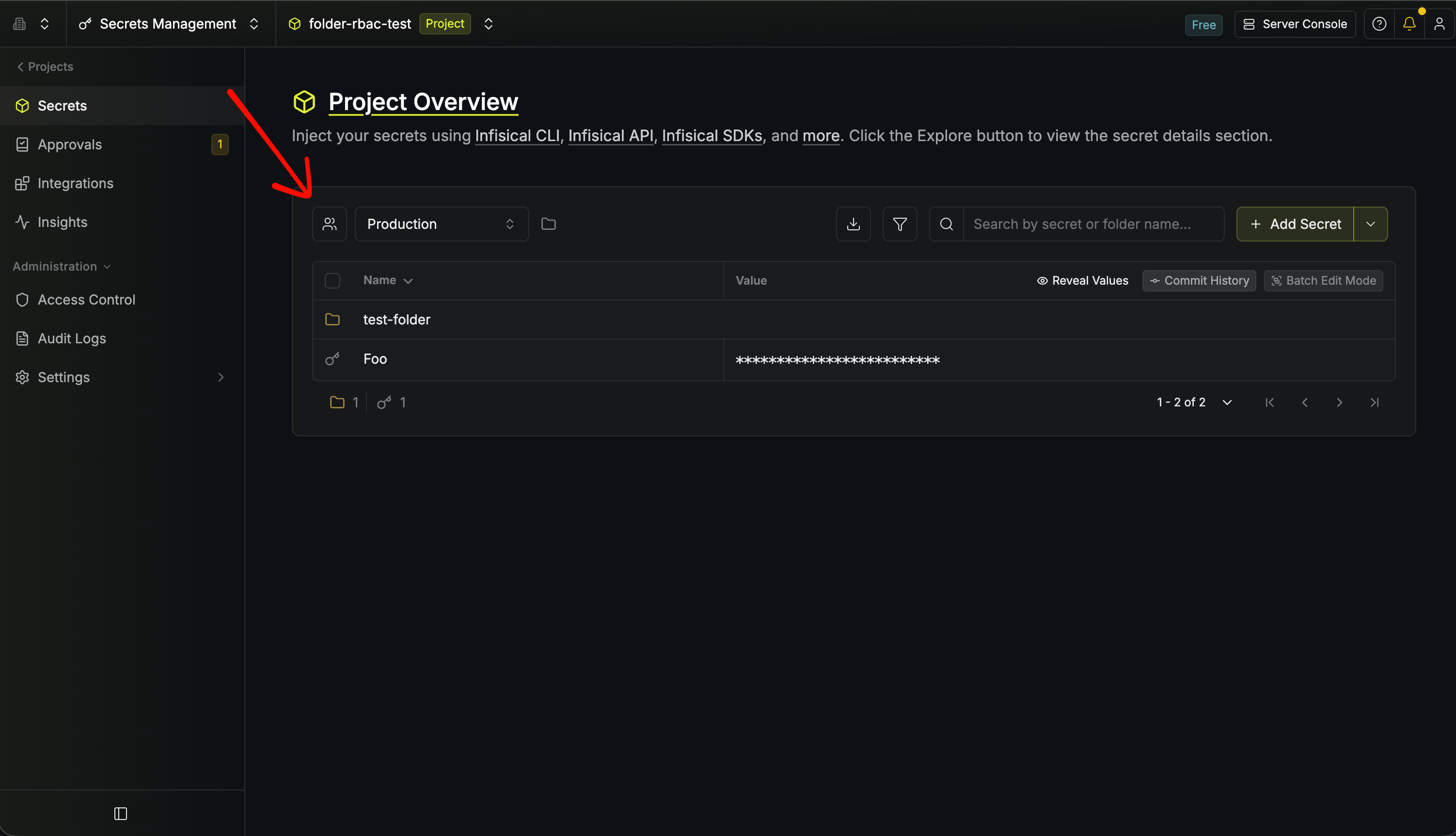 To set access on a folder in the list, hover over its row and select the members icon that appears.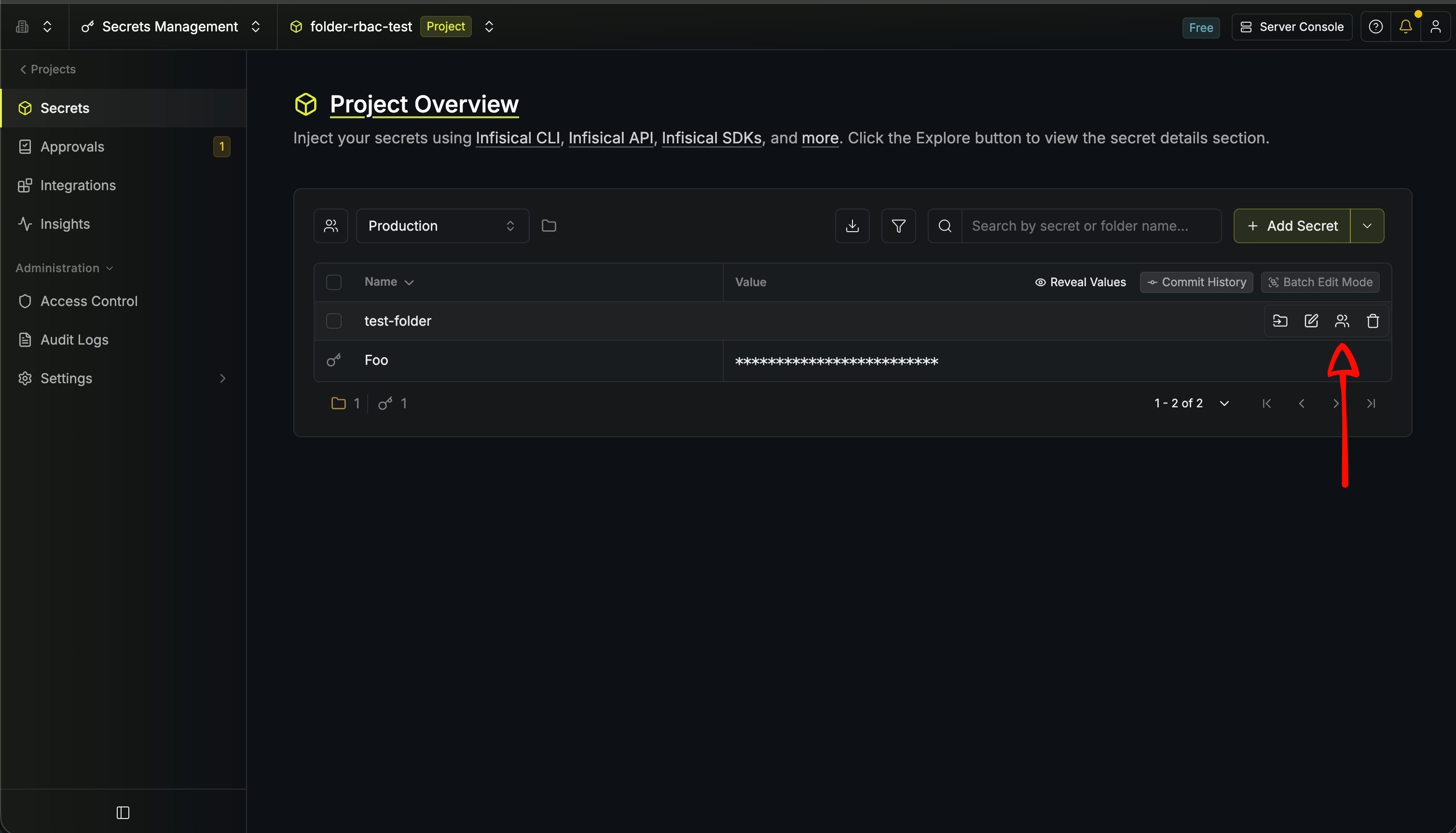
To set access on a folder in the list, hover over its row and select the members icon that appears.Review and set access for current members
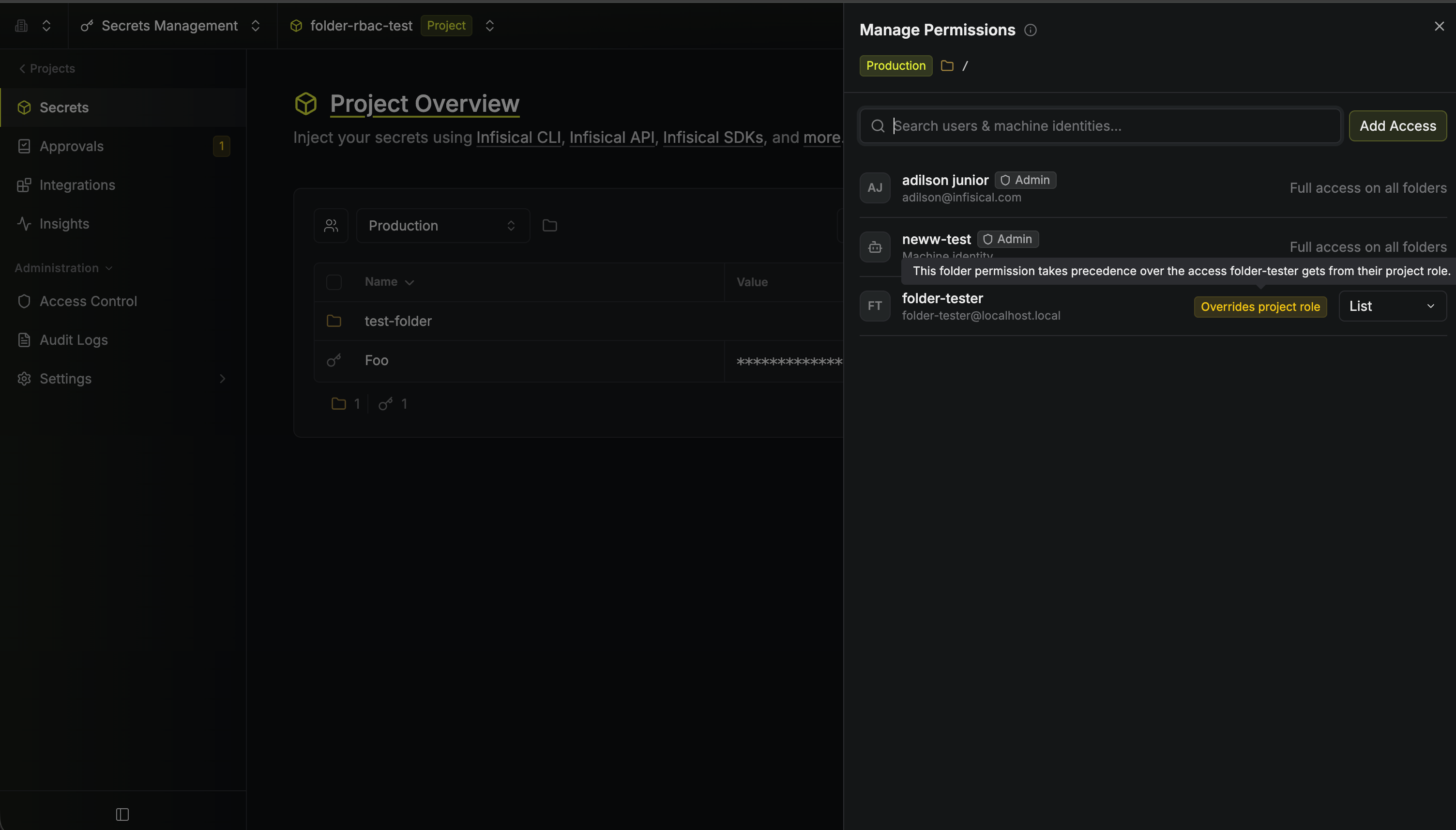
The Manage Permissions sheet lists everyone who can already reach this folder through their project roles. Anyone whose access comes from a project role rather than a grant shows an Access from project role selector, and hovering over it names their roles.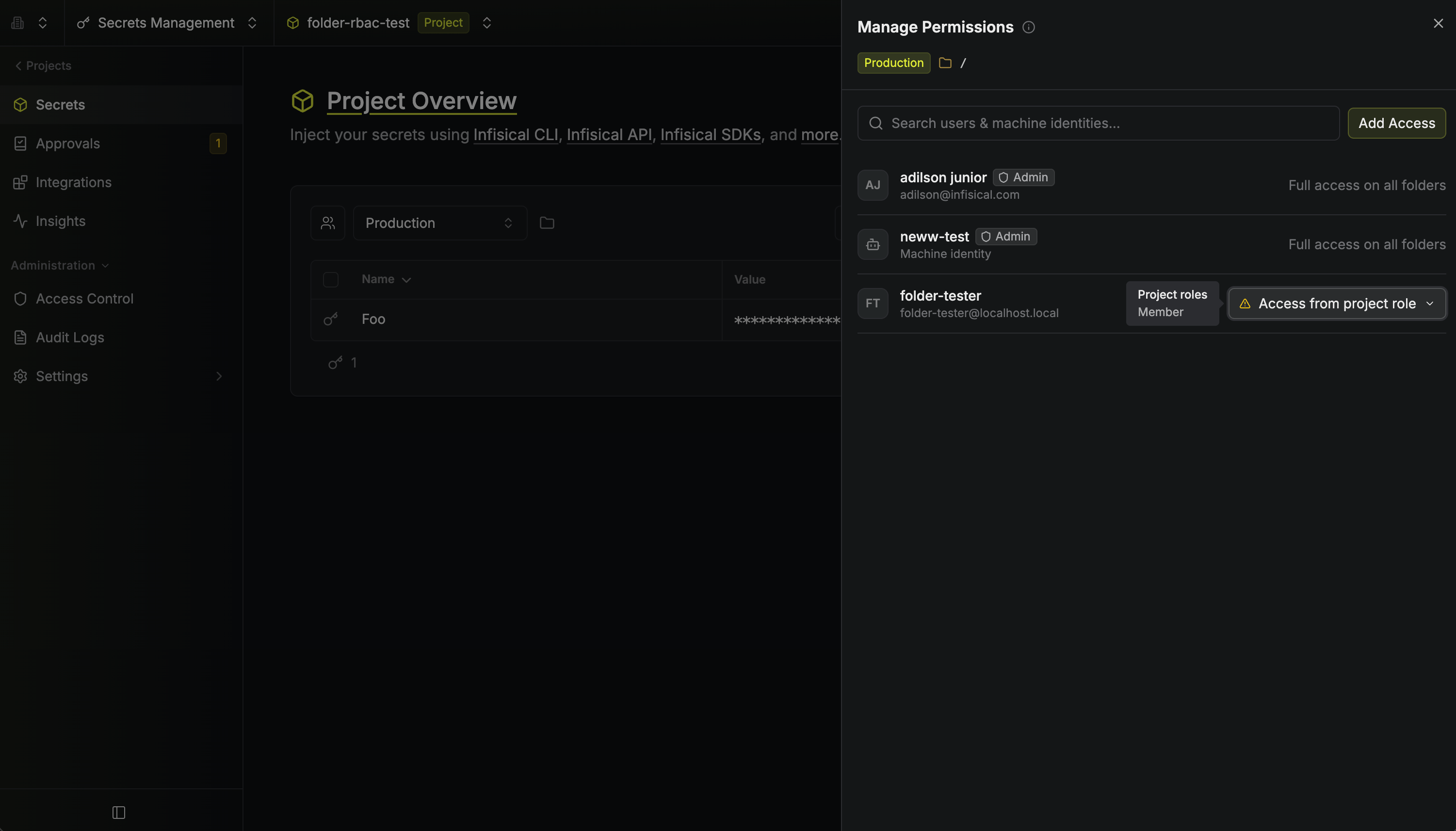 Use the dropdown on any row to set their folder role. The same menu lets you add temporary access or remove access. Project admins appear as having full access on all folders and cannot be given a folder grant.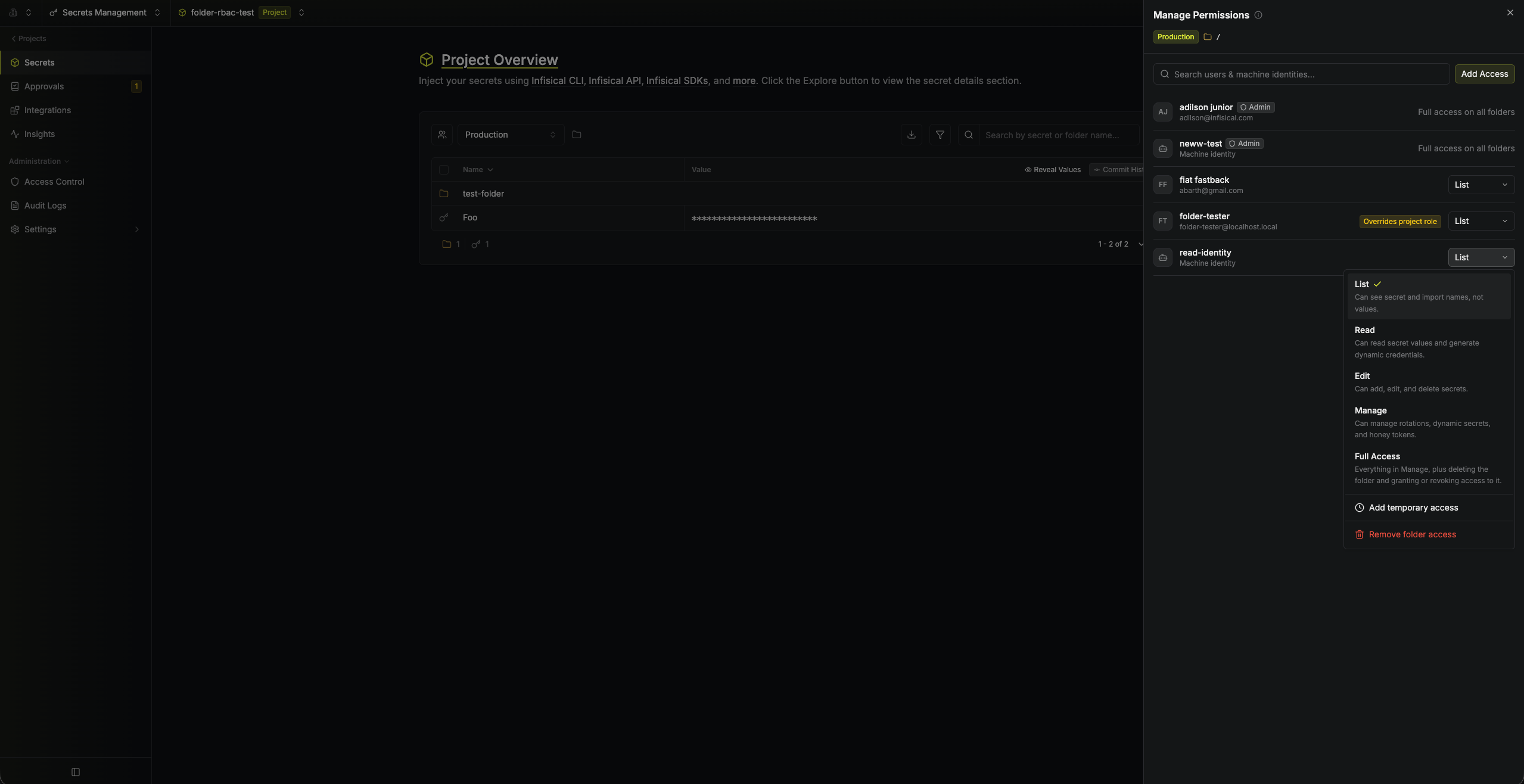
Use the dropdown on any row to set their folder role. The same menu lets you add temporary access or remove access. Project admins appear as having full access on all folders and cannot be given a folder grant.Add access
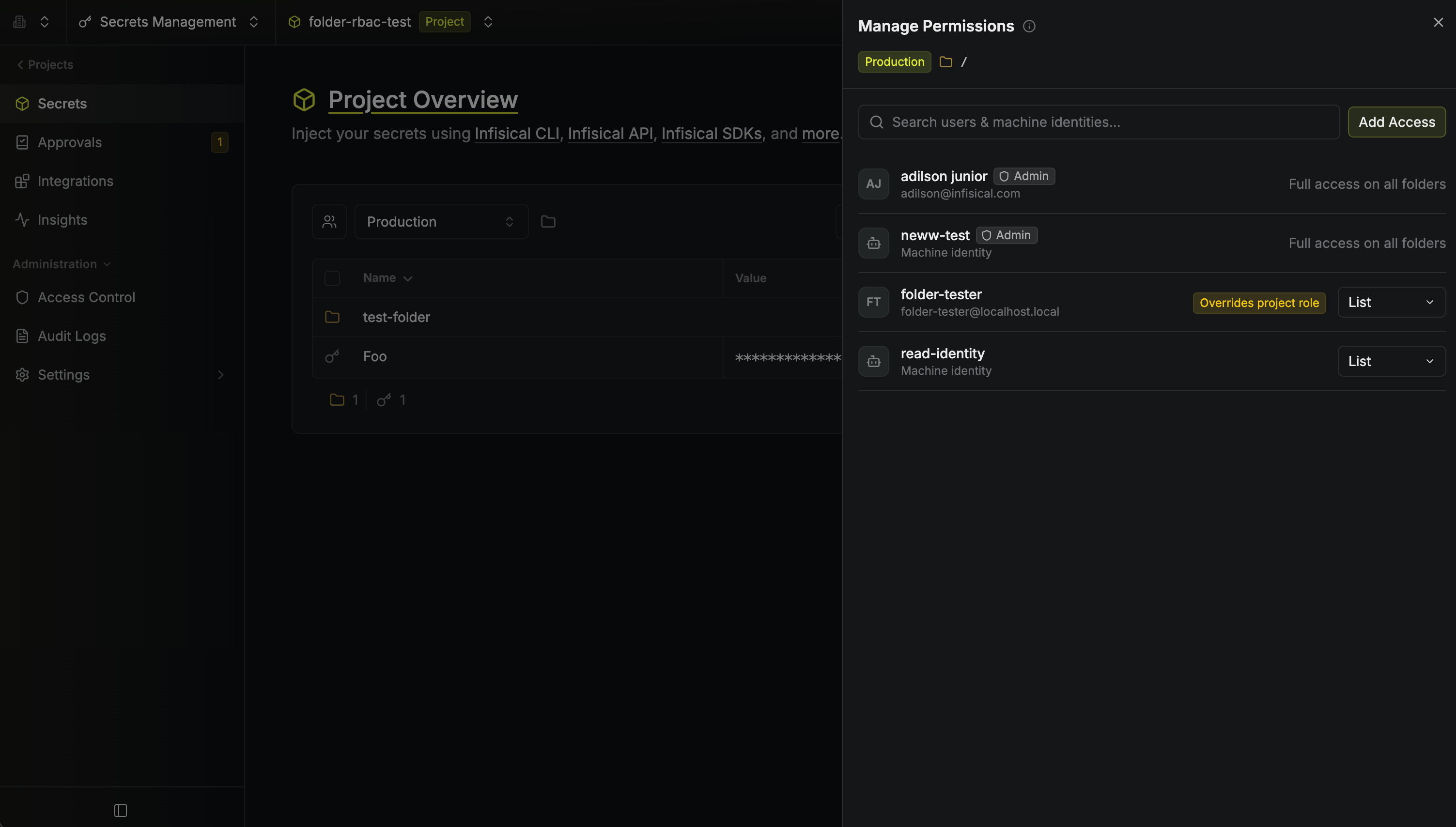
Select Add Access and pick the user or machine identity you want to assign a role to. This list includes project identities who have no access to this folder at all. Choose a role, optionally set a duration under Temporary access, then select Add Access to save.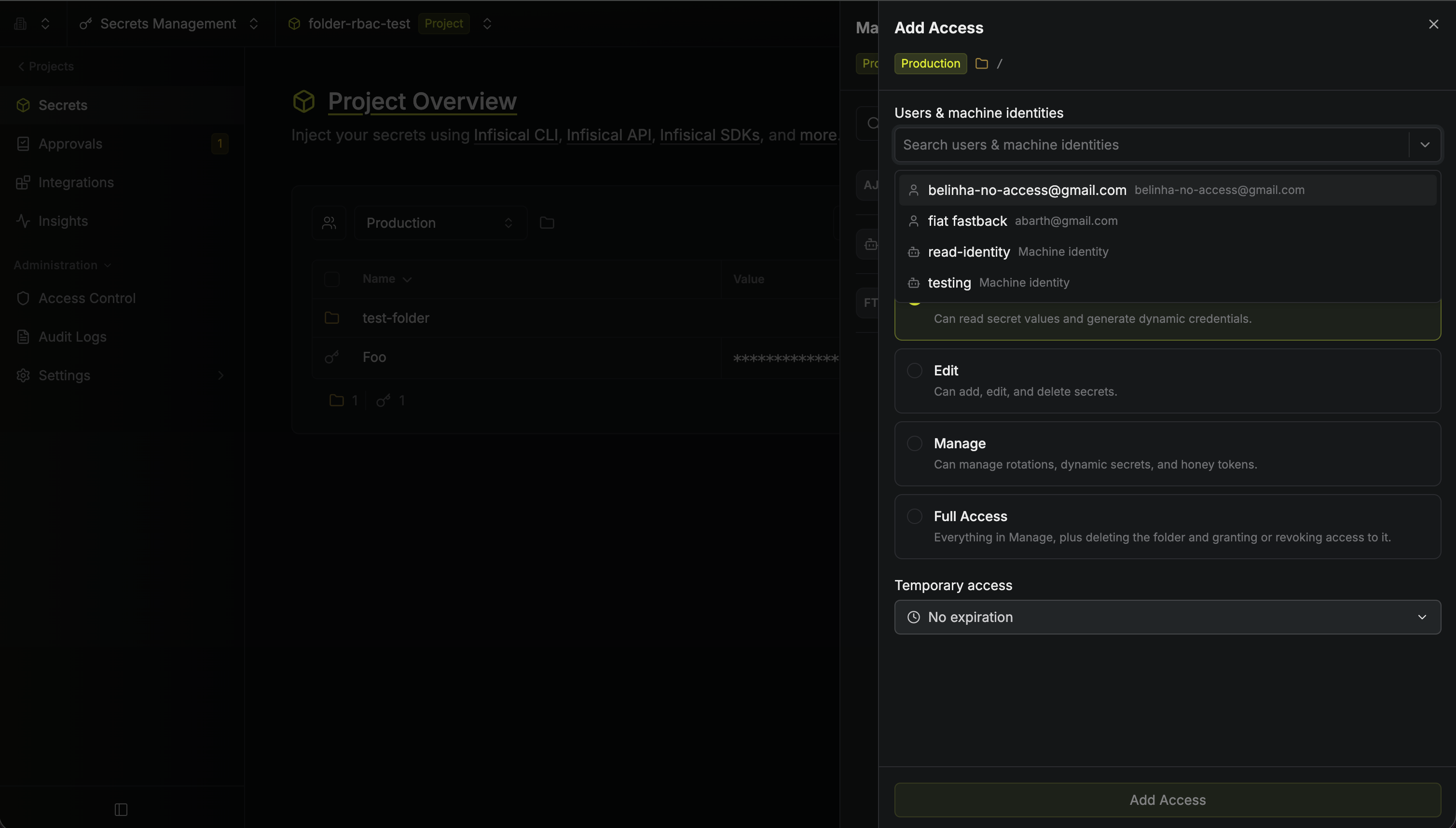
Setting temporary access
Access can be time-bound so you can choose a duration when you add it, or open the role dropdown on an existing row and set one there. The row then shows how long is left, and once the window elapses the access stops applying immediately and the user or identity falls back to their project roles.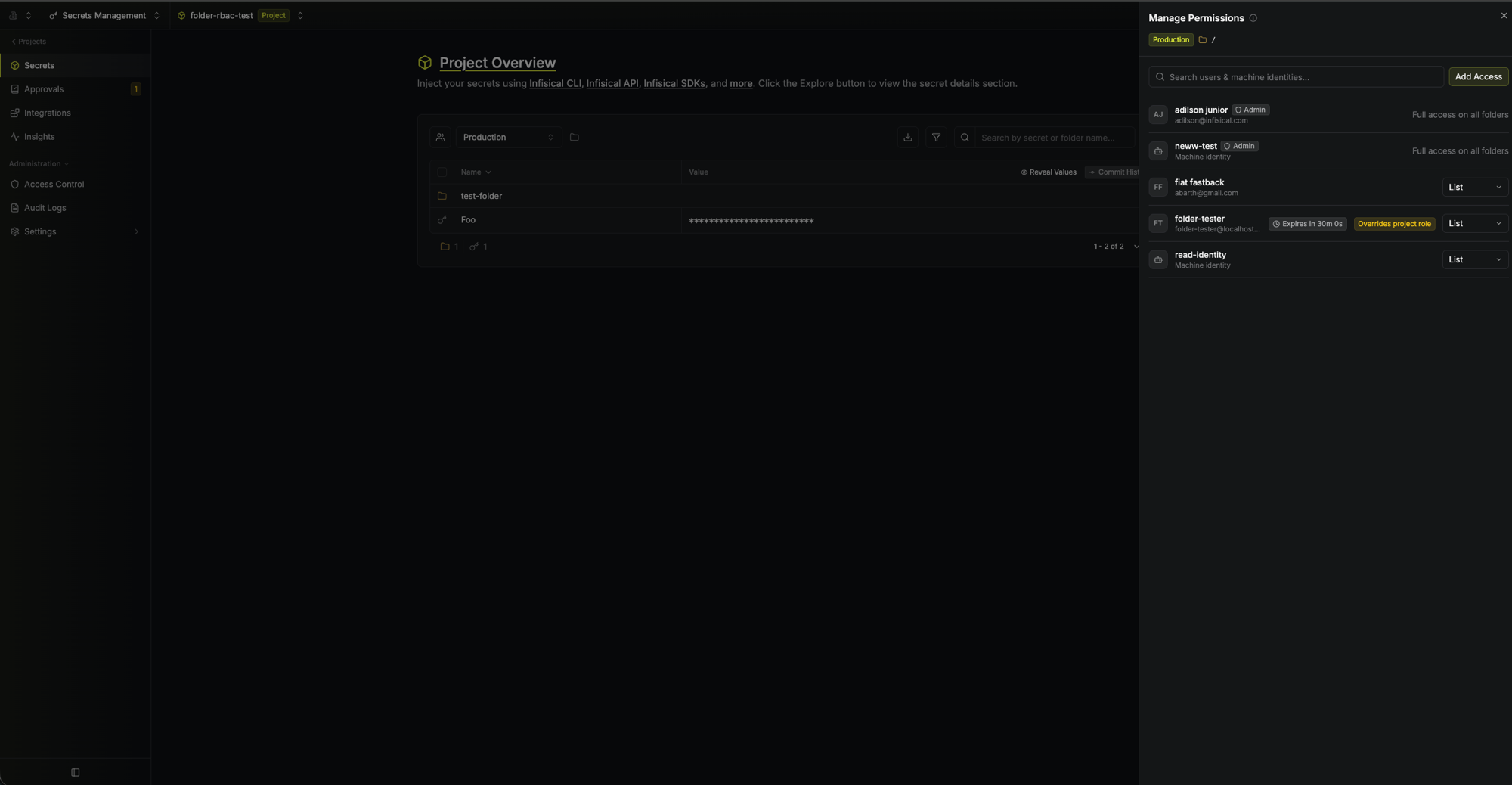
Full Access can’t be temporary. A Full Access holder can grant folder
access to other people, and those accesses would outlive their own expiration.
Grant Full Access permanently, or use Manage for time-bound access.
Reviewing folder access
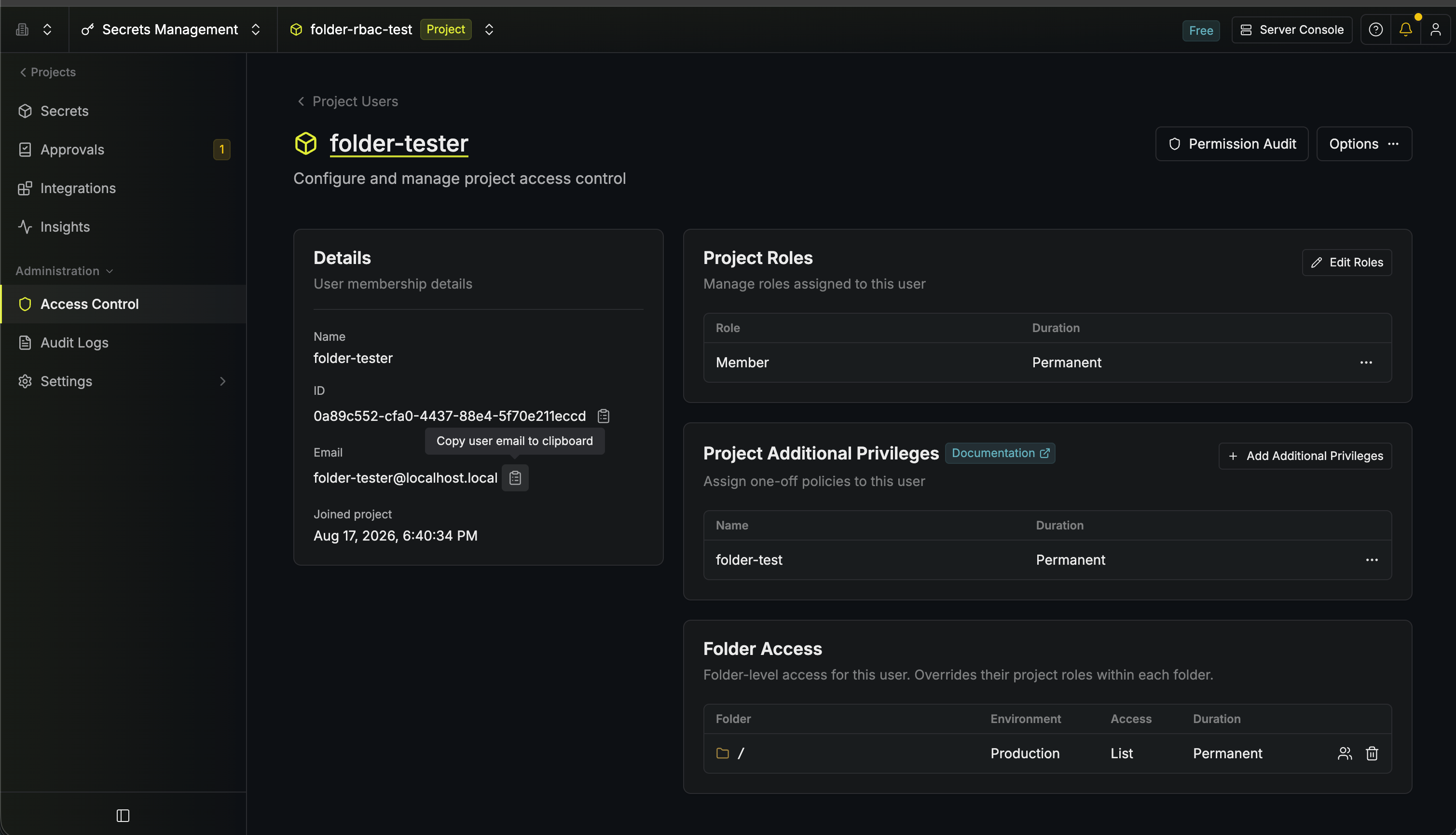
To see every folder a user or machine identity has been granted access to, go to your project’s Access Control page and open that user/identity. The Folder Access lists each grant with its folder, environment, role, and duration, and lets you change or revoke it.