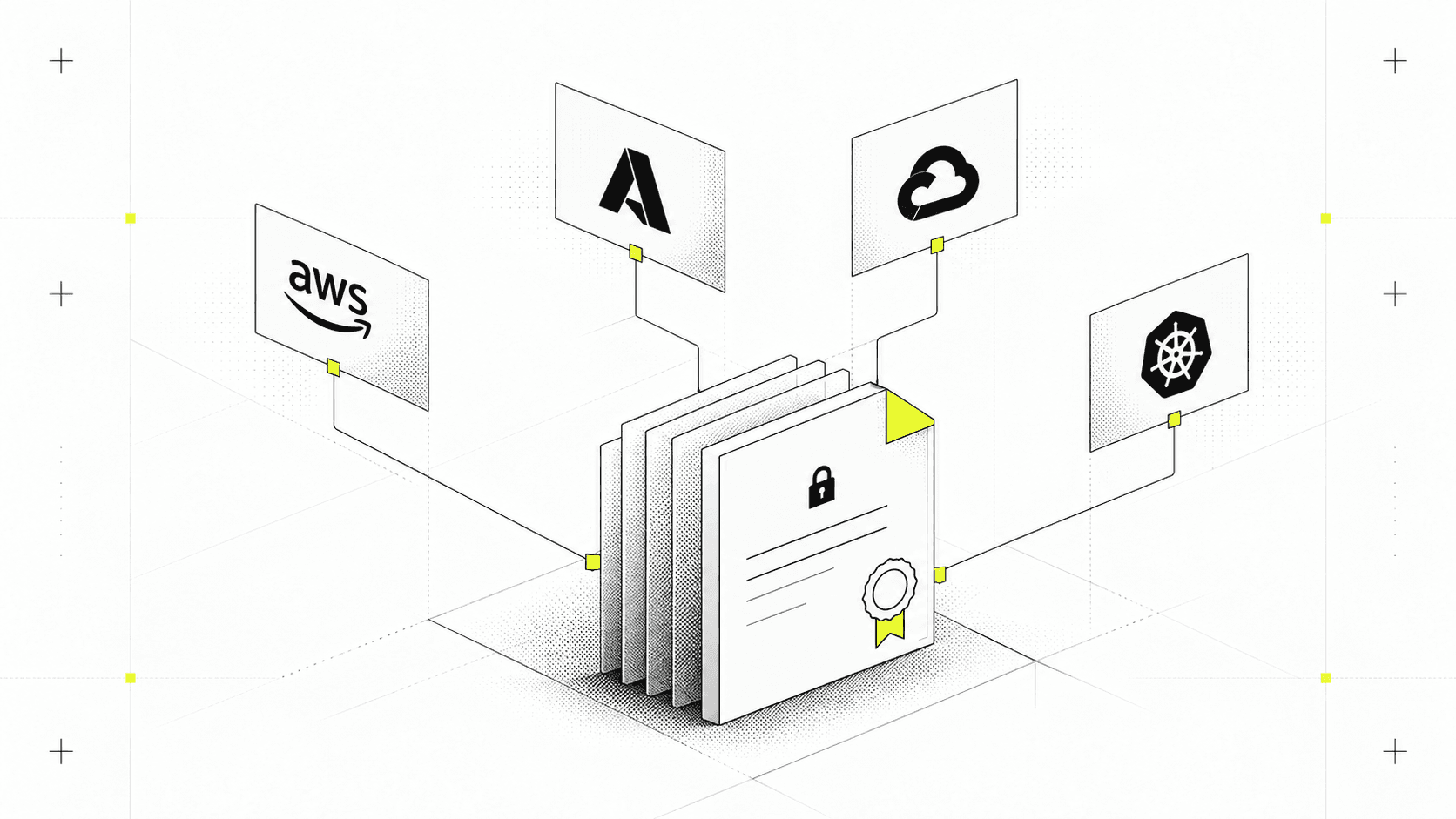
Multi-Cloud Benefits

The October 2025 AWS outage lasted 15 hours. For companies running exclusively on AWS, those fifteen hours meant complete service disruption, lost revenue, and frantic calls. For organizations with multi-cloud architectures, it meant a few hours of redirecting traffic while their primary provider recovered.
This is not hypothetical. Major cloud outages happen, and you cannot assume they will be rare. What separates resilient organizations from vulnerable ones isn’t luck; it’s architectural choice.
Multi-cloud infrastructure has evolved from a defensive posture against vendor lock-in into a strategic capability that unlocks flexibility, resilience, and competitive advantage. Yet many technical leaders hesitate, intimidated by the perceived operational complexity. That complexity is real, but manageable, and the cost of remaining locked to a single vendor compounds over time in ways that aren’t immediately visible until they become catastrophic.
Why Single-Cloud Comfort is Becoming Untenable
Cloud providers have fundamentally shifted the power dynamic in their favor. What began as fierce competition for enterprise customers has matured into a landscape where, at scale, organizations find themselves at the mercy of unilateral decisions.
Service deprecations can arrive with limited notice, and the window varies by product and provider, which increases planning risk when you are deeply dependent on a single vendor. Pricing structures change with quarterly business reviews. Regional capacity constraints limit growth. Compliance requirements force geographic distribution that a single provider can’t satisfy. The AI/ML capabilities you need exist on one platform, while your core infrastructure runs on another.
Consider the mathematics of vendor dependency. A mid-sized SaaS company running exclusively on GCP discovers that its primary database service is being sunset. Migration engineering costs in the millions, timeline impact of at least a quarter of delayed feature development. All while their competitors are running multi-cloud architectures and shifting workloads over a weekend.
In practice, most enterprises already operate multi-cloud environments. They just do so accidentally rather than intentionally. Shadow IT creates credential sprawl. Acquisitions bring different cloud footprints. Individual teams choose best-of-breed tools without coordination. The result is multi-cloud chaos rather than a multi-cloud strategy.
The strategic question has shifted. It’s no longer “should we go multi-cloud?” Most organizations already have. The question is: “Will we manage this intentionally, or continue responding to vendor decisions reactively?”
The Real Mathematics of Multi-Cloud
Multi-cloud architecture introduces legitimate complexity. Pretending otherwise does a disservice to technical leaders evaluating this path. The honest assessment matters: yes, operational overhead increases, but the nature of that complexity differs fundamentally from the risk profile of vendor lock-in.
Management Complexity Accumulates Across Dimensions:
Each cloud provider operates with distinct APIs, console interfaces, and operational paradigms. Deploying the same application to AWS and GCP requires learning two infrastructure-as-code approaches, two monitoring systems, and two IAM models. Teams context-switch between platforms, maintaining expertise across multiple vendor ecosystems.
Security Challenges Multiply with Each Additional Provider:
Credentials proliferate: API keys, service accounts, access tokens, certificates. Each cloud implements different security models, audit logging formats, and compliance frameworks.
According to Verizon’s 2025 Data Breach Investigations Report, 88% of web application breaches involve credential compromise. Multi-cloud environments exponentially increase the attack surface if managed traditionally.
This is where secrets management becomes the critical enabler rather than just another tool. Without unified credential management across clouds, security teams face an impossible task: maintaining consistent policies, rotation schedules, and audit trails across disparate systems. A secrets management platform like Infisical transforms this challenge from insurmountable to tractable by providing a single control plane for credentials across all cloud environments.
Integration and Data Movement Create Hidden Costs:
Network latency between clouds impacts application performance. Data egress charges, often buried in pricing details, accumulate when moving large datasets between providers.
Applications must handle eventual consistency across geographically distributed systems.
Here’s the distinction: some complexity is front-loaded (standardizing tooling and abstractions), but multi-cloud also creates ongoing operational load that needs explicit ownership and budget.
You build the abstraction layer once, and it serves every application thereafter. Vendor lock-in creates ongoing business risk that compounds. Each year of dependency makes migration more expensive, and each new service adopted increases switching costs.
The mathematics that actually matter:
- Multi-cloud setup cost: Front-loaded, predictable, amortizes over time
- Vendor lock-in cost: Unpredictable, potentially catastrophic, and increases over time
- Value of optionality: Compounds as your infrastructure scales
Cloud transfer pricing changes over time and can reshape the economics of your architecture. AWS, for example, reduced internet egress pricing in 2021 and later removed certain transfer fees for customers switching providers in 2024. Multi-cloud readiness does not guarantee lower costs, but it can reduce lock-in and improve your negotiating posture when pricing shifts.
The Abstraction Layer That Makes It Work
The organizations succeeding with multi-cloud don’t treat each provider as a separate silo requiring independent management. They build unified abstraction layers that present consistent interfaces across all clouds, transforming complexity from multiplicative to additive.
Infrastructure as Code provides the foundation. Terraform and Pulumi enable cloud-agnostic infrastructure definitions. IaC reduces duplication and enables consistent workflows, but true portability still requires provider-specific resources, guardrails, and testing. This isn’t theoretical. Teams manage hundreds of production services across multiple clouds with a single code repository.
Container orchestration eliminates application-layer lock-in. Kubernetes has become the de facto for multi-cloud runtime. Applications packaged as containers run identically across any Kubernetes cluster, regardless of the underlying cloud provider. No AWS SDK dependencies hard-coded into application logic. No GCP-specific service integrations are creating migration barriers. The portability is real and immediate.
Observability platforms aggregate monitoring. Instead of juggling CloudWatch, Azure Monitor, and GCP Operations separately, platforms like Datadog or Grafana provide single-pane-of-glass visibility. Define alerts once, and apply them consistently across all infrastructure. Troubleshoot incidents without switching contexts between vendor consoles.
Secrets management serves as the critical connective tissue. Every application requires credentials like database passwords, API keys, encryption certificates, and service account tokens. The traditional approach multiplies this complexity: manage AWS Secrets Manager, GCP Secret Manager, and Azure Key Vault independently, each with different APIs, rotation mechanisms, and audit formats.
A unified secrets management platform solves the most pernicious multi-cloud challenge. With Infisical, security teams enforce consistent policies across all clouds. Developers use one workflow regardless of the deployment target. Credentials rotate automatically on uniform schedules. Audit logs aggregate in a single location. The credential sprawl problem, one of the top multi-cloud security risks, is addressed at the root.
This matters more than infrastructure portability. Applications can theoretically run anywhere if containerized, but if their credentials are scattered across vendor-specific secret stores, that portability is theoretical. Unified secrets management makes multi-cloud practical rather than aspirational.
The insight that transforms multi-cloud from burden to capability: abstraction layers don’t multiply operational overhead by the number of clouds. They add manageable, one-time complexity that pays compounding dividends in flexibility. Build the right enabling infrastructure: unified secrets management, infrastructure as code, observability, CI/CD—and multi-cloud becomes operationally simpler than managing vendor-specific tooling across a single-cloud deployment.
The Practical Playbook
Strategic multi-cloud adoption follows proven patterns. Organizations that succeed avoid the all-or-nothing migration trap, instead building capabilities incrementally while maintaining operational stability.
Start with workloads where multi-cloud delivers immediate value. Disaster recovery represents the lowest-risk entry point. Replicate critical systems to a second cloud provider without changing primary operations. When your main provider experiences regional outages, failover mechanisms activate automatically. Warm standby can be material but predictable. Outage impact varies widely by business model, yet for revenue-critical systems, downtime can become extremely expensive fast.
Geographic optimization provides tangible performance improvements. You can deploy services close to users. AWS for North American traffic, GCP for European customers, and regional providers for Asia-Pacific. Latency improvements translate directly to conversion rates and user satisfaction metrics.
Best-of-breed service selection unlocks capabilities unavailable from single vendors. Use BigQuery for data analytics, AWS for general compute workloads, and Azure for enterprise integration. Each cloud excels in specific domains and multi-cloud architecture lets you leverage those strengths rather than accepting compromise.
Build enabling infrastructure before migrating existing systems. The sequence matters. Attempting multi-cloud migration without foundational tooling creates the operational nightmare that gives multi-cloud its intimidating reputation. Establish these capabilities first:
Unified secrets management. Before distributing applications across clouds, solve credential management. Infisical provides the control plane for secrets across AWS, GCP, Azure, and on-premise infrastructure. Applications authenticate once, retrieve credentials programmatically, and never expose static keys in code or configuration files. This single investment eliminates the most common multi-cloud security failure mode.
Infrastructure as Code tooling. Standardize on Terraform or Pulumi before expanding cloud footprint. Define infrastructure specifications that can be deployed to any provider. Version control infrastructure alongside application code. Changes are deployed through automated pipelines with appropriate review processes.
Observability and monitoring. Implement unified monitoring before operational load increases. Aggregate logs, metrics, and traces from all environments into single platforms. Configure alerting rules that work consistently regardless of where applications run.
CI/CD pipelines with multi-cloud deployment capabilities. GitHub Actions, GitLab CI, and similar platforms support deploying to multiple clouds from single pipelines. Build this capability early; retrofitting existing deployment processes is more disruptive than building multi-cloud support from the beginning.
The Proven Migration Pattern:
- Phase one: New workloads deploy multi-cloud native from day one. Design with portability as a first-class requirement. This builds organizational competency without risking existing production systems.
- Phase two: Non-critical existing workloads migrate for learning. Choose services with clear rollback paths. Document operational differences between providers. Build runbooks that work across clouds.
- Phase three: Critical systems migrate with mature operational practices. By this point, teams have experience managing multi-cloud deployments, monitoring tools are proven, and incident response procedures account for multi-cloud complexity.
Common Pitfalls:
- The distributed monolith trap: replicating single-cloud architecture across multiple providers without redesigning for portability. This creates the worst outcome: multiplied complexity without flexibility benefits.
- Death by a thousand tools: adopting different tooling for each cloud environment. Standardize on abstraction layers that work everywhere. Three unified platforms are manageable; twelve vendor-specific tools are not.
- Shadow IT resurgence: governance matters more in multi-cloud environments, not less. Teams shouldn’t independently adopt cloud services without coordination. Centralized secrets management and infrastructure as code enforce necessary consistency.
- Cost blindness: implement comprehensive tagging strategies from day one. Monitor data egress costs continuously, especially cross-cloud movement. Cloud providers bury these charges in pricing details, but they accumulate rapidly when moving data between platforms.
The organizations winning with multi-cloud aren’t doing anything magical. They invested in the enabling infrastructure that makes multi-cloud manageable, particularly unified secrets management, and then systematically built expertise. The technical challenges are real, but solved. The strategic advantages compound over time.
Freedom as Competitive Advantage
Multi-cloud architecture isn’t about distributing infrastructure across providers because it’s fashionable. It’s about function and freedom, having the capability to make optimal choices for each workload, at each moment, without artificial constraints imposed by vendor dependency.
Concrete Business Advantages:
Negotiating leverage transforms vendor relationships. When cloud providers know you can migrate workloads, pricing discussions shift dramatically. Organizations with credible multi-cloud capabilities secure better contract terms, more flexible commitments, and preferential support. Single-cloud customers accept whatever pricing changes arrive with quarterly business reviews.
Innovation velocity accelerates when you can adopt new capabilities without wholesale migration. When a cloud provider releases breakthrough AI/ML services, multi-cloud organizations can begin using them immediately, such as running AI workloads on one platform while core infrastructure remains elsewhere. Single-cloud organizations wait for their vendor to develop equivalent capabilities or face massive migration projects.
Resilience extends beyond infrastructure uptime to business continuity. But service deprecations, pricing changes, and strategic pivots by cloud providers aren’t resolved—they’re permanent. Multi-cloud architecture provides insurance against vendor strategic decisions that conflict with your business requirements.
Cost optimization moves from theoretical to practical. Real price comparison, true leverage in negotiations, ability to shift workloads based on actual usage economics rather than sunk costs. The difference between “we should evaluate other providers” and “we are actively deploying to GCP” is the difference between posturing and leverage.
Regulatory compliance becomes achievable rather than aspirational. Data sovereignty requirements force geographic distribution. GDPR mandates, financial services regulations, and government contracts with specific cloud requirements. Multi-cloud architecture handles these without forcing business-limiting compromises.
Talent advantage emerges in competitive hiring markets. Developers want to work with best-in-class tools, not vendor-locked stacks. Organizations that can offer experience across cloud platforms, exposure to diverse technologies, and freedom from rigid vendor ecosystems attract stronger technical talent.
Strategic Reframe:
Companies viewing multi-cloud as an operational burden will struggle with complexity because they’re solving the wrong problem. They’re trying to maintain separate cloud environments rather than building unified abstractions.
Companies viewing multi-cloud as a strategic capability invest in the enabling infrastructure, including unified secrets management, infrastructure as code, observability platforms, and CI/CD automation. They reap compounding returns as their infrastructure scales.
The question facing technical leaders isn’t whether you’ll eventually need multi-cloud flexibility. Market dynamics, vendor behavior, and technical requirements make this inevitable for organizations operating at scale. The question is whether you’ll build that capability proactively (when you have time to do it right) or reactively, when a vendor decision forces your hand.
The organizations that built multi-cloud capabilities in 2023 negotiated better terms during 2024 pricing discussions. The organizations that built multi-cloud capabilities in 2024 maintained operations during 2025 regional outages. The pattern is consistent: proactive investment in flexibility provides leverage when it matters most.
The best time to escape vendor lock-in is before you’re locked in. The second-best time is now. Start with the foundations. Implement unified secrets management across your infrastructure. Adopt infrastructure as code practices. Containerize applications for portability. Build these capabilities incrementally while maintaining operational stability.
The technical challenges of multi-cloud are solved problems. The strategic advantages compound over time. The only question is whether you’ll choose to build that capability intentionally or continue operating at the mercy of vendor decisions.
Multi-Cloud, Without the Operational Tax
Multi-cloud can be a real advantage when it is implemented with intent. That means independent failure domains, portable deployment patterns, and a clear understanding of the ongoing overhead.
The upside is resilience and flexibility when pricing, availability, or organizational requirements change. The downside is complexity that only pays off if you actively design for it and test it, especially for stateful systems, identity, and incident response.
If you want the benefits without building brittle glue across providers, standardize the fundamentals first. Start with the pieces that are hardest to unwind later, like secrets, machine identities, and policy enforcement.
Infisical is one option to help by giving teams a consistent way to manage secrets and machine identities across environments, with policy controls, auditability, and workflows that work across clouds.
Whether you adopt Infisical or another approach, the goal is the same: reduce switching costs, keep your security and ops primitives consistent, and make multi-cloud a deliberate capability instead of an accidental sprawl.