Top Doppler Alternatives in 2026

Doppler is a secrets management platform with a strong developer experience, environment-based secret storage, integrations, rotation workflows, and a hosted product that is easy to try. It has also expanded since many older comparison posts were written, including Doppler On-prem and Doppler Share.
Teams still look for Doppler alternatives when they need open-source software, flexible self-hosting, broader identity security capabilities, or a platform that can grow beyond secrets alone. The strongest alternative depends on what your team values most: transparency, deployment control, platform breadth, pricing, or deep cloud-native integration.
1. Infisical
Infisical is an open-source identity security platform for developers, machines, and AI agents. It started with Secrets Management and now brings secrets, certificates, privileged access, KMS, and secret scanning into one developer-first platform.
That makes Infisical a strong Doppler alternative for teams that want a modern secrets management experience without giving up source-code transparency, self-hosting, or room to consolidate adjacent security workflows over time.
Infisical has more than 27,000 GitHub stars and is used by startups, enterprises, and public-sector teams that need secure secrets management across development, CI/CD, production, and regulated infrastructure.
Key features
Compared to Doppler, Infisical is strongest when teams want secrets management as part of a broader, open-source security platform.
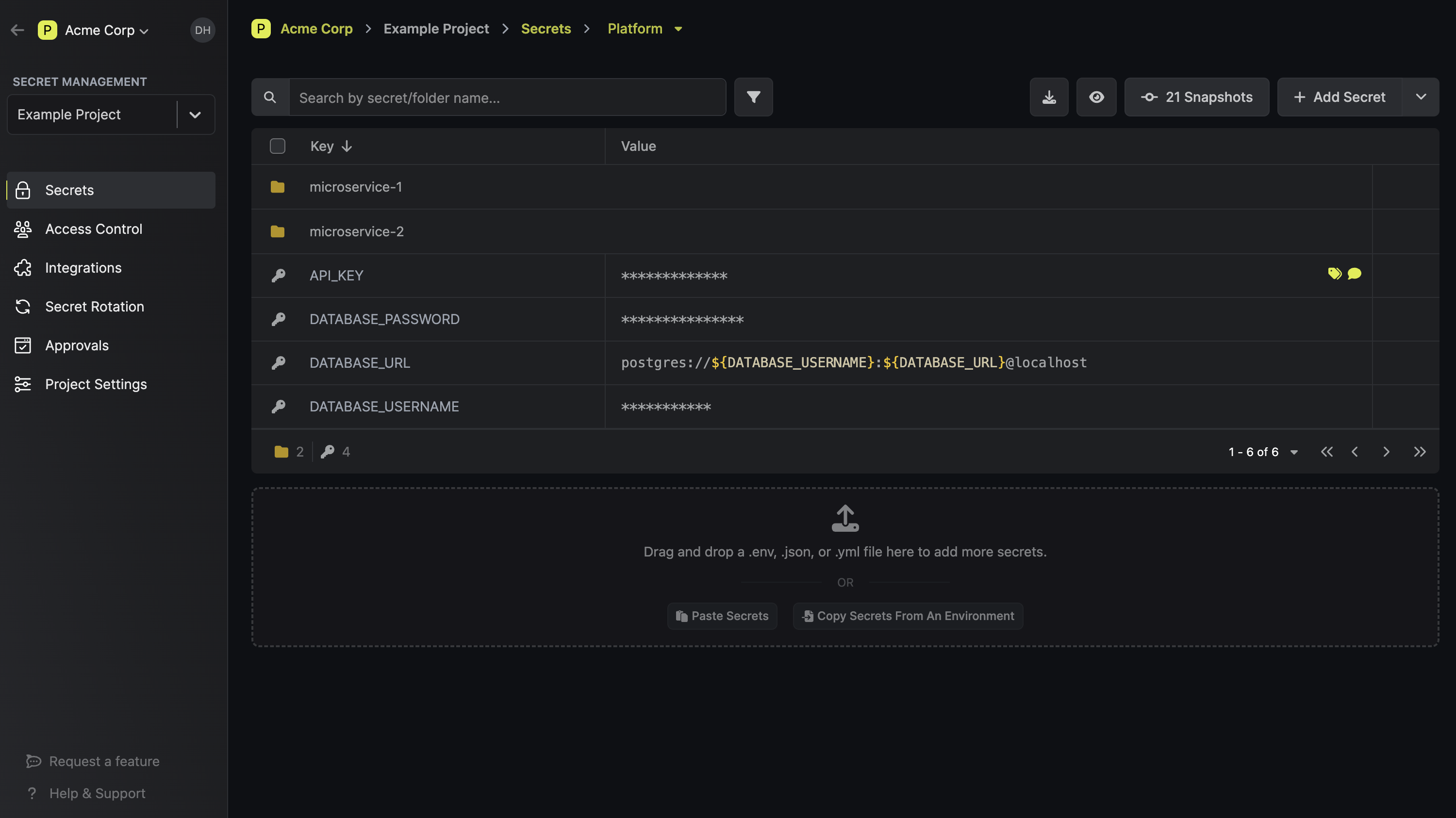
- Secrets Management: Manage secrets across development, CI/CD, staging, and production with a developer-friendly UI, CLI, SDKs, audit logs, access controls, and integrations.
- Dynamic secrets and rotation: Generate dynamic secrets and rotate credentials for databases and infrastructure services.
- Certificate Management: Create private certificate authorities, issue X.509 certificates, and automate certificate workflows from the same platform.
- Secret Scanning: Detect leaked credentials across repositories and other developer systems before they become incidents.
- Secret Sharing: Create end-to-end encrypted links with security controls for sharing sensitive values inside or outside your organization.
- Flexible deployment: Use Infisical Cloud, dedicated cloud, or self-host Infisical in your own infrastructure.
How does Infisical compare to Doppler?
Doppler has improved its product breadth with On-prem and Doppler Share. Infisical still has a clearer advantage for teams that care about open source, mature self-hosting, and an all-in-one platform that extends beyond secrets management.
| Capability | Infisical | Doppler |
|---|---|---|
| Open source Audit code, contribute, and build with community visibility | ✅ | ❌ |
| Self-hosting Run inside your own infrastructure | ✅ | ✅ Enterprise On-prem |
| Self-serve start Try without a mandatory sales process | ✅ | ✅ Developer and Team trials |
| Dynamic secrets and rotation Generate and rotate credentials automatically | ✅ | ✅ |
| Integrations and ecosystem Connect with CI/CD, cloud, Kubernetes, and developer tools | ✅ | ✅ |
| Developer workflows Approvals, access requests, and team workflows | ✅ | ✅ |
| Secret scanning Detect leaked credentials across repositories and systems | ✅ | ❌ |
| Secret sharing Share sensitive values through expiring encrypted links | ✅ | ✅ Doppler Share |
| Broader identity security platform Manage secrets, certificates, privileged access, KMS, and scanning together | ✅ | ❌ |
| Developer community Large open-source community and public roadmap visibility | ✅ | ❌ |
Why teams choose Infisical
- Open source and transparent: Teams can inspect the codebase, evaluate the architecture, and adopt Infisical with more confidence than a closed-source-only tool.
- Flexible self-hosting: Infisical supports self-hosted and cloud-hosted deployments, which helps teams with compliance, data residency, or network isolation requirements.
- More than secrets storage: Infisical covers secrets management, secret scanning, Certificate Management, KMS, and Privileged Access Management in one platform.
- Developer-first workflows: Teams get integrations, access controls, approval workflows, and automation without building custom orchestration around a key-value store.
- Transparent pricing: Infisical has a generous free tier and clear pricing that scales with team needs.
2. HashiCorp Vault
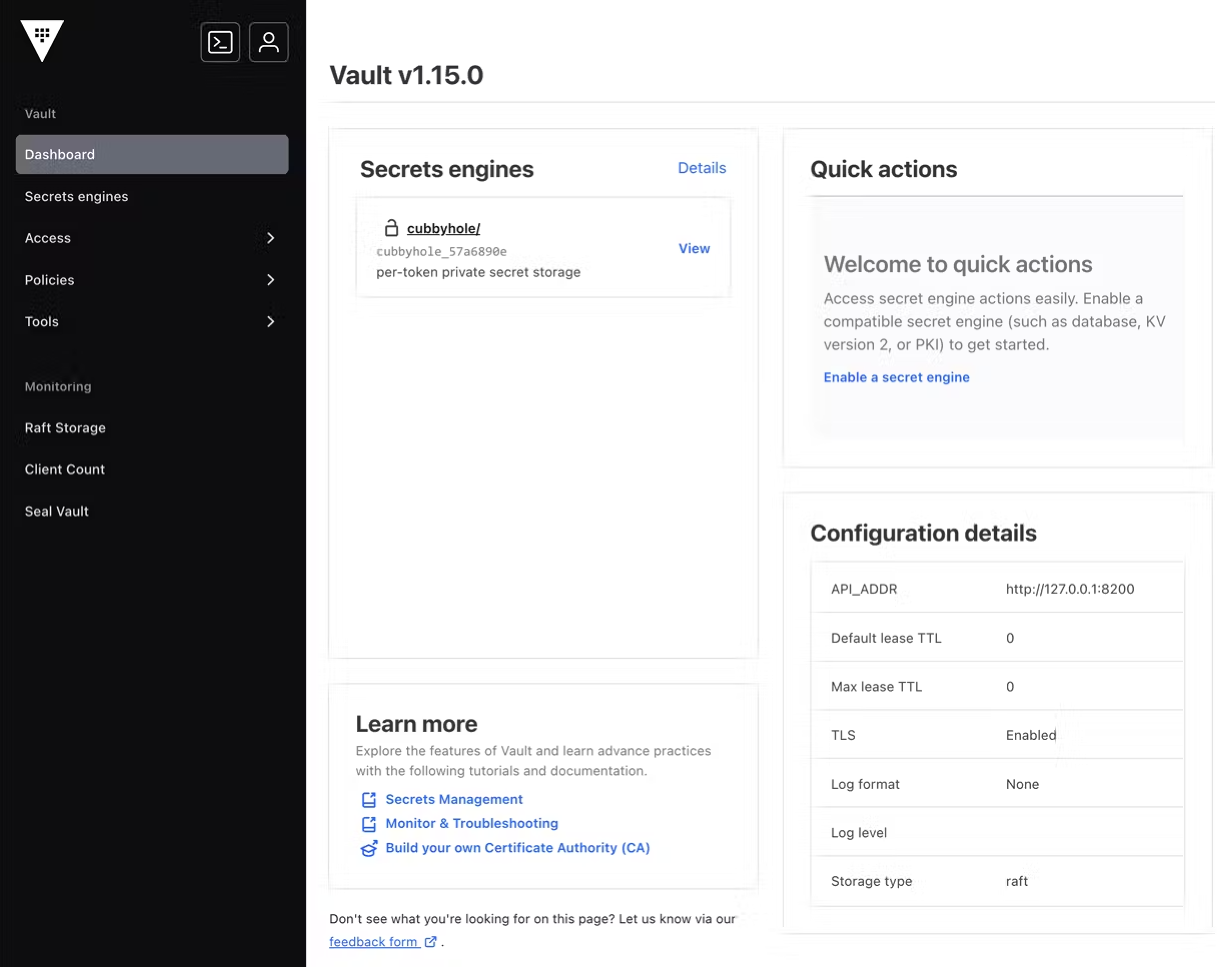
HashiCorp Vault is one of the best-known secrets management tools. It is powerful, widely adopted, and often used by large infrastructure teams that need a flexible foundation for secrets, encryption, and identity-based access.
Vault is also operationally heavy. Teams often need specialized expertise to configure, run, and maintain it well. That makes Vault a better fit for organizations with dedicated platform engineering capacity than for teams that want a ready-to-use product experience.
How does HashiCorp Vault compare to Doppler?
Vault is stronger than Doppler for teams that need open-source software, self-hosting, and deeper infrastructure control. Doppler is usually easier to start with and has a more polished hosted developer workflow.
| Capability | HashiCorp Vault | Doppler |
|---|---|---|
| Open source Audit code and build integrations | ✅ | ❌ |
| Self-hosting Host on your own infrastructure | ✅ | ✅ Enterprise On-prem |
| Self-serve start Try without a mandatory sales process | ✅ Community edition | ✅ Developer and Team trials |
| Dynamic secrets and rotation Generate and rotate database credentials | ✅ | ✅ |
| Integrations and ecosystem Connect to infrastructure and developer tools | ✅ | ✅ |
| Developer workflows Approvals, access requests, and productized team workflows | ❌ Requires custom work | ✅ |
| Secret scanning Detect leaked credentials across repositories and systems | ❌ Not a core Vault workflow | ❌ |
| Secret sharing Share sensitive values through expiring encrypted links | ❌ | ✅ Doppler Share |
| Operational complexity Setup and maintenance burden | Higher | Lower |
Why teams choose HashiCorp Vault
- Deep infrastructure control: Vault supports advanced secrets, identity, and encryption workflows.
- Open-source foundation: Teams can run Vault themselves and inspect the codebase.
- Large ecosystem: Vault has broad integrations and a long history in infrastructure teams.
Vault is powerful, but it often behaves more like a foundation that teams build on than a finished workflow product. If your team wants open source with a more complete developer experience, Infisical is usually the cleaner path.
3. AWS Secrets Manager
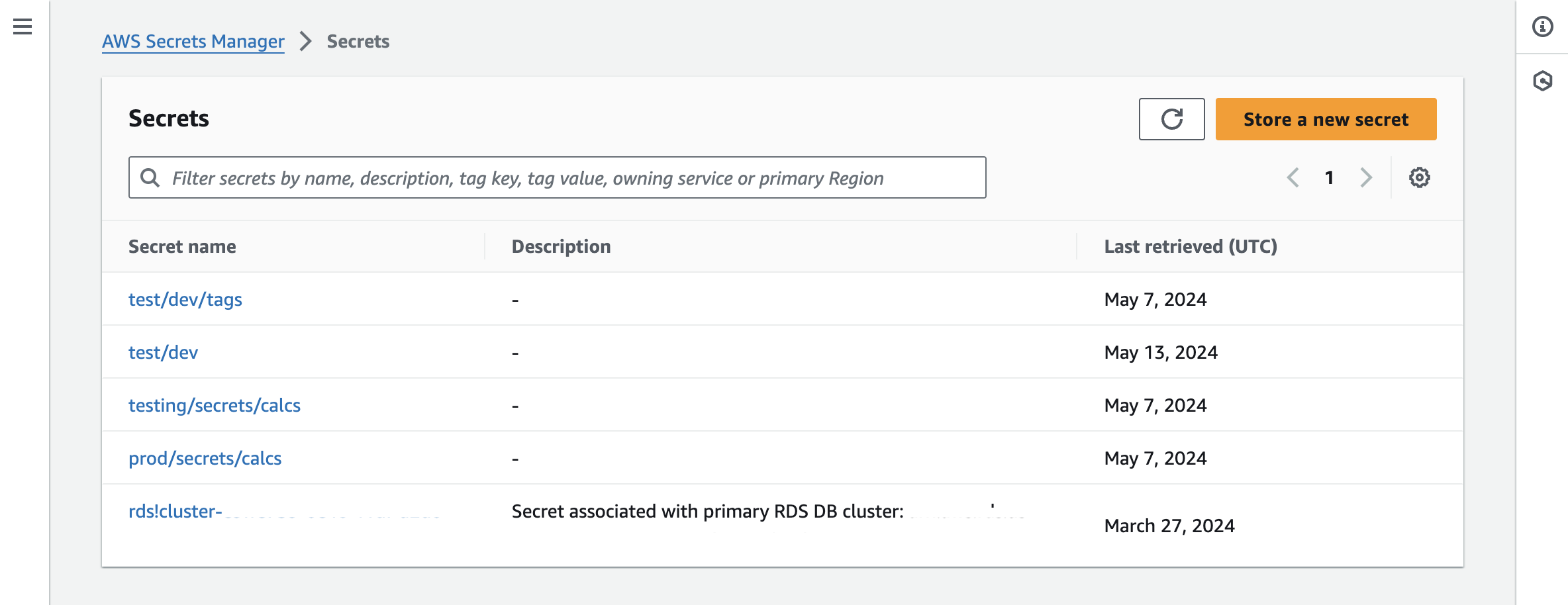
AWS Secrets Manager is AWS's native secrets management service. It is a practical choice for teams that run mostly on AWS and want a managed service connected to AWS Identity and Access Management (IAM), AWS Lambda, Amazon Relational Database Service (RDS), and other AWS services.
AWS Secrets Manager is less compelling when teams need cross-cloud workflows, self-hosting, strong developer collaboration workflows, or a platform that can manage secrets consistently across many environments.
How does AWS Secrets Manager compare to Doppler?
AWS Secrets Manager is strongest inside AWS. Doppler is stronger for teams that want a dedicated secrets management product with a better cross-environment developer experience.
| Capability | AWS Secrets Manager | Doppler |
|---|---|---|
| Open source Audit code and contribute | ❌ | ❌ |
| Self-hosting Host on your own infrastructure | ❌ | ✅ Enterprise On-prem |
| Self-serve start Try without a mandatory sales process | ✅ | ✅ Developer and Team trials |
| Dynamic secrets and rotation Rotate database credentials and secrets | ✅ AWS-native rotation | ✅ |
| Integrations and ecosystem Connect with infrastructure and developer tools | ✅ Strongest in AWS | ✅ Broader developer tooling |
| Developer workflows Approvals, access requests, and collaboration workflows | ❌ | ✅ |
| Secret scanning Detect leaked credentials across repositories and systems | ❌ | ❌ |
| Secret sharing Share sensitive values through expiring encrypted links | ❌ | ✅ Doppler Share |
| Cross-cloud support Manage secrets consistently across clouds and tools | Limited | Stronger |
Why teams choose AWS Secrets Manager
- AWS-native integration: It works naturally with AWS services and permissions.
- Simple procurement: Teams already using AWS may not need a separate vendor approval process.
- Managed operations: AWS runs the service, so teams avoid hosting their own secrets backend.
AWS Secrets Manager is a reasonable starting point for AWS-heavy teams. Teams usually outgrow it when they need stronger developer workflows, better cross-cloud support, or consistent secrets management across more than AWS.
4. Building an in-house secrets management tool
Some organizations consider building secrets management internally. An in-house tool can be tailored to existing infrastructure, policies, and workflows. It can also give teams full control over how secrets are stored, accessed, rotated, and audited.
That control comes with a real cost. Secrets management is security-critical infrastructure, and building it well requires ongoing engineering, security review, incident response, audit readiness, and developer education.

Pros of building in-house
- Customization: The system can match your infrastructure, access model, and internal workflows exactly.
- Control: Your team decides how the system changes, where it runs, and how it integrates with internal tooling.
Cons of building in-house
- High engineering cost: Design, implementation, testing, and hardening take time away from product and platform work.
- Ongoing maintenance: Secrets infrastructure needs patches, monitoring, incident response, and security reviews.
- Audit complexity: Custom tools can create more work during compliance reviews because auditors may not recognize the system.
- Security expertise: A secure secrets platform requires deep knowledge of encryption, access control, identity, logging, and operational security.
- Limited support: Internal teams own every outage, migration, feature request, and edge case.
- Training burden: New developers need custom onboarding for a tool that only exists inside the company.
- Scaling risk: A system that works for one team may need major re-architecture as the organization grows.
Building in-house can make sense for large organizations with unusual requirements and dedicated security engineering teams. Most teams get better leverage from a mature secrets management platform.
Is Infisical right for you?
Infisical is a strong Doppler replacement if your team wants a developer-friendly secrets management platform with more transparency, more deployment control, and more room to consolidate security workflows over time.
Infisical is especially worth evaluating if:
- You want an open-source platform instead of a closed-source-only product.
- You need flexible cloud, dedicated cloud, or self-hosted deployment options.
- You want secrets management, secret scanning, Certificate Management, KMS, and Privileged Access Management in one platform.
- You want developer workflows like integrations, audit logs, access controls, approval workflows, and automation without building them yourself.
- You want a platform your team can try quickly and expand as your requirements grow.
Explore the Infisical product, read the documentation, or talk to an Infisical expert if you want help comparing options.